Anti-piracy body AAPA has issued a position paper updating its views on regulatory responses to live broadcast piracy. “Live broadcast piracy in Europe is growing, not receding,” it asserts. “In November 2025 the Commission’s own assessment of Recommendation (EU) 2023/1018 found that it has not delivered the improvement it sought. The sector has exhausted what ... Continue reading

The Alliance for Creativity and Entertainment secured the shutdown of Turkish piracy service Dizigom and transfer of 16 associated domains through a settlement. The service drew about 21 million monthly visits at its peak.

ITV has renewed its anti-piracy partnership with Friend MTS for two years, expanding monitoring to major ITV4 events while maintaining round-the-clock protection across broadcast and streaming platforms. The service detects unauthorized streams and helps remove pirated-content links.

Dutch flight instructor Sam Guichelaar received a copyright warning from Starlink less than two days after torrenting an episode of Dexter: Resurrection. Starlink says repeated violations can lead to suspended or terminated service; Guichelaar plans to use a VPN and switch providers.
Global traffic to piracy websites fell 5.72% in 2024 to 216.3 billion visits, but television remained the largest category. Film piracy dropped 18%, while publishing was the only category to grow; streaming and downloads accounted for nearly equal shares.

Dutch broadcasters, streaming services and industry groups are urging the government to coordinate tougher enforcement against illegal IPTV, including action against providers, resellers and payment networks, and to improve cooperation and consumer awareness. They warn of harm to media investment and users’ security.

AAPA estimates 34.4 million people in the EU, UK and Switzerland used illicit IPTV in 2025, generating €2.6 billion for illegal providers and costing legitimate pay-TV firms up to €5.8 billion in lost revenue. The group urges faster, coordinated anti-piracy measures.

The US Chamber of Commerce urged Congress to address digital piracy as part of a wider cybercrime and national security threat. It called for hearings, stronger enforcement tools, international cooperation, and expanded public-private partnerships.

A UK study warns that illegal streaming exposes viewers to fraud, identity theft, malware and potentially organised crime; 37% of active users surveyed had encountered harmful or unsafe content. Researchers estimate fraud and theft cost these users about £270 million annually, while UK consumers spend around £1.2 billion a year on pirated content.

Bosnia and Herzegovina’s cable operators and audiovisual rights groups are urging online platforms and advertisers to speed up the removal of ads for illegal IPTV services. Discussions focused on clearer reporting procedures, but no platforms or implementation timetable were named.

Illegal streaming costs UK broadcasters an estimated £1.35 billion annually, including losses from sports, films and television. The study estimates wider effects equivalent to 10,400 jobs and £366 million in lost tax revenue, potentially reducing investment in production and sport.

A WPI Economics study estimates that 31% of UK adults accessed illegal streams in the previous three months, rising to 51% among 18–24-year-olds. Films and TV were more commonly pirated than live sports, and social media was the most common access route.
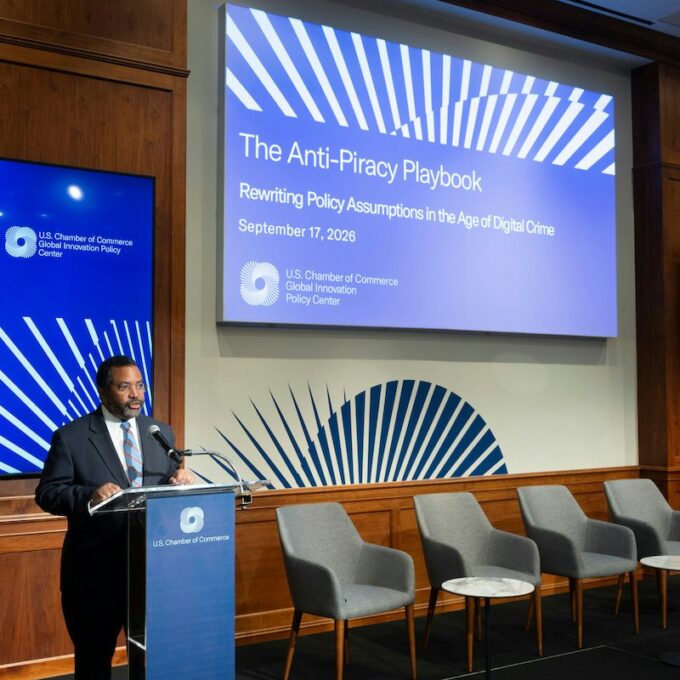
At the US Chamber of Commerce's Digital Piracy Symposium, leaders emphasized that digital piracy has evolved into a significant threat to consumers and businesses, necessitating a comprehensive approach to enforcement and policy that addresses its broader implications beyond copyright infringement.
UK anti-piracy organisation FACT says enforcement activity over the summer has resulted in prison sentences, arrests and financial penalties against operators and users of illegal streaming services.

Omdia's study emphasizes the need for a shift from reactive to preventive anti-piracy measures in the streaming era, highlighting the limitations of traditional methods and advocating for multi-DRM, forensic watermarking, and application security to enhance content protection.

CANAL+ and LALIGA have signed a strategic anti-piracy agreement covering almost 50 countries across Europe, Africa and Haiti.
The Omdia study Next-Generation Anti-Piracy for TV and Video: Why the streaming era demands a shift from reaction to prevention therefore warns that piracy can no longer be viewed solely as a technical or legal issue.

Irdeto and blockchain data specialist Chainalysis are strengthening their partnership to tackle digital piracy and cryptocurrency-enabled cybercrime.

Despite the increase in legal streaming services, piracy remains prevalent, with over 21% of online adults using unauthorized sources, particularly among engaged viewers like sports fans. The study highlights that convenience and ease of access are significant factors driving this trend.

Illegal streaming is costing the UK economy at least £1.35 billion a year and is linked to the loss of more than 10,000 jobs, according to a report commissioned by anti-piracy initiative BeStreamWise.

Friend MTS and AgileTV have completed the first integration of AgileTV’s content delivery network (CDN) with Friend MTS’ server-side watermarking technology.

Nearly 1.2 million households across the Nordic region now have access to illegal IPTV services, spending an estimated €280 million a year, according to new research from Mediavision.

A 68‑year‑old man from Chorley has been sentenced to six and a half years in prison for running a large‑scale illegal IPTV operation that generated £980,812 in criminal profits.

Leaks regarding “The Odyssey” and “Spider-Man: Brand New Day” show that Hollywood is entering a new phase in the battle for control over content, distribution, and brand value.