EUIPO STUDY: INFLUENCERS AND THEIR RELATIONSHIP TO IP
How do influencers understand and exercise their own rights? How do they approach the protection of third-party intellectual property, and what impact does their behaviour have on their audience, especially young people? These questions were the focus of the study Influencers and IP, conducted this year by the European Union Intellectual Property Office. This study is the first comprehensive EU-level research systematically examining the relationship between influencers and intellectual property.
Influencer marketing is one of the fastest-growing segments of the digital economy. The global market value is expected to reach USD 32.55 billion in 2025. Influencers have a significant impact on consumer behaviour and cultural norms, particularly among Generation Z. The EUIPO therefore considered it important to understand how influencers engage with intellectual property – whether they infringe it, or, conversely, protect it or help strengthen respect for IP.
The study builds on the EUIPO’s long-standing activities in intellectual property education for young people and responds to the findings of the Intellectual Property and Youth Scoreboard 2022, which found that some young people consume pirated content or counterfeit goods based on recommendations from influencers.
The survey process
The survey was conducted between July and August 2025 via the online questionnaire made available in the 24 official EU languages. More than four thousand influencers in all 27 EU Member States were contacted, with the final sample consisting of 300 respondents. The researchers worked with four categories of influencers based on audience size, focusing on Instagram, TikTok, and YouTube. The authors of the study emphasise that this is qualitative, exploratory research, not a fully representative statistical survey, but the resulting document still provides valuable insight into the attitudes and behaviour of influencers across the EU.
The largest part of the sample (49%) consisted of influencers with a “mid-tier” audience category, who have 50,000–500,000 followers. They were followed by influencers from the “micro” category with 10,000–50,000 followers (30%). Influencers in the “macro” category with 500,000–1 million followers accounted for 13%, while influencers in the “nano” category with 1,000–10,000 followers made up 8% of the sample.
In terms of age, influencers over 30 years old predominated (58%), while approximately 41% were under 30 years old.
92 % of influencers report that they monetise their activities. However, more than half have no formal business assets. Only 30% own a brand, 18% operate an online store, and 18% hold registered intellectual property rights (trademarks, etc.). However, brand ownership does not necessarily mean that the influencer holds registered IP rights.
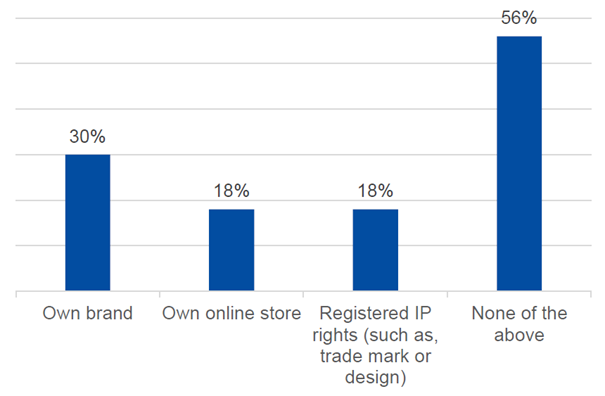
Source: Influencers and IP; Base: 300 influencers in the EU, who were allowed to provide multiple answers to the question. A total of 365 answers were collected. Screening question: Q5 Do you have any of the following?
The research revealed significant differences between influencers with registered intellectual property rights and those without the rights. Those who own such rights are one step ahead in their business. They are significantly more likely to own a brand and run an online store, which suggests that intellectual property protection is linked to a higher degree of professionalism.
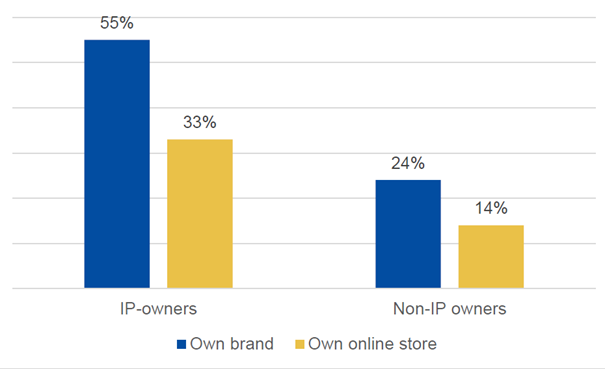
Source: Influencers and IP; Base: 54 IP owners; 246 non-IP owners. Screening question: Q5 Do you have any of the following? (Select all that apply)
Responsibility towards the audience and brand authenticity
The vast majority of influencers (96%) feel responsible for the impact their promotions may have on their audience. Of these, 72% report full responsibility and 24% feel “somewhat responsible.” Only 1% of respondents said they feel no responsibility. This result confirms that influencers see themselves not only as entertainment creators but also as actors with an ethical commitment.
The declared level of brand authenticity verification is equally high: 92% of influencers report always verifying the legitimacy of the brands they collaborate with. However, researchers point out that the question of how this kind of verification is carried out in practice remains open.
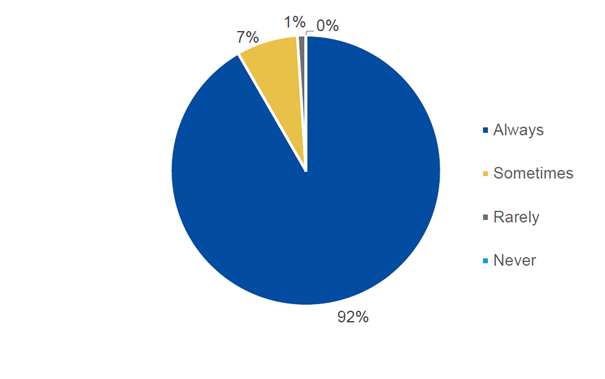
Source: Influencers and IP; Base: 300 influencers in the EU. Question: Q1 Do you feel responsible for the impact your promotions could have on your audience?
Familiarity with IP rights
A total of 86% of influencers consider themselves at least somewhat familiar with their IP rights, with one-third reporting a strong understanding of their IP rights and 14% having only limited or no knowledge. Influencers who already hold registered intellectual property rights (94%) have significantly higher awareness.
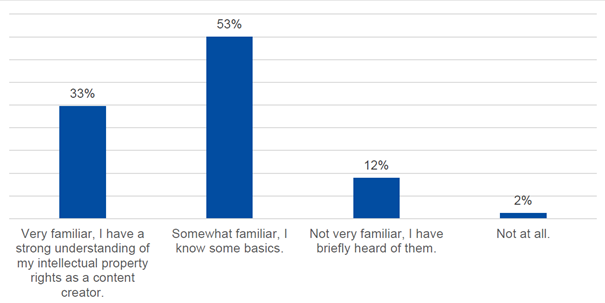
Source: Influencers and IP; Base: 300 influencers in the EU. Question: Q3 How familiar are you with your own intellectual property rights (such as copyright, trade marks, designs) as a content creator?
This result indicates a shift towards greater professionalisation of the industry, but at the same time suggests room for further education, especially for smaller and emerging creators.
Impact of addressing IP on follower count
Influencers’ attitudes toward whether communication about intellectual property would have an impact on their audience are ambiguous. Nearly half (48%) believe that the number of followers would remain unchanged, 14% expect a positive impact, while 17% fear a decline in the number of followers.
The fear of losing their audience is one of the key findings of the study, explaining why influencers generally do not actively raise the issue of intellectual property, even though they recognise its importance.
Respect for IP
The vast majority of influencers say they avoid promoting counterfeit goods (94%) and pirated content (93%). Only a small percentage admit to having participated in such a promotion in the last year.
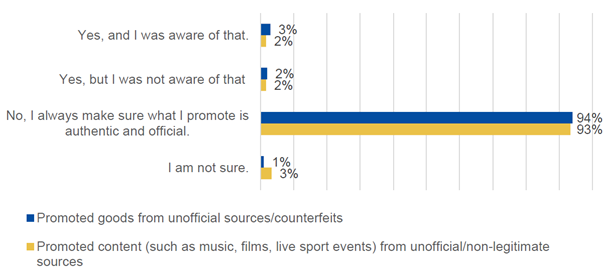
Source: Influencers and IP; Base: 300 influencers in the EU; Question: Q5 In the last 12 months have you promoted goods from unofficial sources/counterfeits? Question: Q6 In the last 12 months have you promoted content from unofficial/non-legitimate sources?
At the same time, 97% of influencers perceive the health and safety risks associated with counterfeit goods and illegal content:
• Roughly three-quarters (76%) of influencers are aware of these risks and exercise caution.
• 16% of influencers were previously unaware but, after completing the survey, expressed concerns.
• 5% of influencers are aware of the risks, but that does not make them more cautious about sharing.
• 2% remain indifferent or show little interest.
Most influencers say they are aware of the links between counterfeiting, piracy, and organised crime, which supports the ethical dimension of their decision-making. The exception is nano-influencers, who attach less importance to these links, with 67% of them not exercising caution. Nano-influencers are also less interested in the fact that criminal organisations are often behind counterfeiting and piracy, or do not think about it at all.
Influencers and AI
Artificial intelligence is becoming a common part of influencers’ work: 51% use it often or occasionally. Influencers have mixed feelings about AI – on the one hand, they appreciate its potential to improve performance and efficiency (56%), but on the other hand, they are concerned about content misuse and unfair competition from virtual influencers.
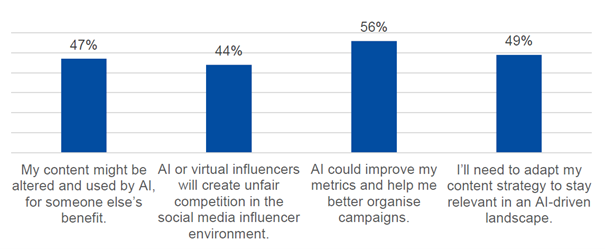
Source: Influencers and IP; Base: 300 influencers in the EU. A total of 588 responses were collected. Question: Q10 How do you expect AI to impact your social media activities as a content creator in the coming 12 months?
72% of influencers are aware of the risks of AI in relation to intellectual property, but nano-influencers in particular show a lower level of awareness. The study therefore recommends focusing future education on the intersection of artificial intelligence and intellectual property.
Key takeaways
The study shows a clear link between intellectual property rights ownership and a higher level of professionalism among influencers. Influencers who already own registered intellectual property rights are generally more advanced in their professional and entrepreneurial journeys. More than half of them (55%) have their own brand, and a third (33%) operate an online store. The situation is significantly different for influencers without registered intellectual property rights – only 24% have a brand, and only 14% have an online store.
The study shows that influencers are reluctant to talk about the importance of respecting IP in their content, even though they are well aware of their responsibility. Almost half of respondents (48%) believe that such a disclosure would not affect their follower count; one-fifth (21%) are unsure of the effect; 14% expect a positive impact; and 17% expect a negative one. Despite these concerns, 96% of influencers feel fully or partially responsible for the impact of their promotions, and 97% are aware of the risks associated with promoting unofficial products or content.
The study also highlighted influencers’ concerns. According to the research, every second influencer (51%) uses artificial intelligence today. At the same time, 47% of them express concerns that their content could be altered and repurposed by artificial intelligence, and 72% are aware that AI-generated output may infringe existing IP rights.
The EUIPO therefore recommends systematic cooperation with influencers, their further education, and involvement in awareness campaigns. Emphasis should be placed in particular on practical examples of the impact of counterfeiting, piracy, and the responsible use of AI.
About the study: The study Influencers and IP was published in November 2025 by the European Union Intellectual Property Office (EUIPO). The research was conducted on behalf of EUIPO by a consortium of KPMG and ICF Next based on an online survey of 300 influencers from all 27 EU Member States. Respondents included influencers who are active on Instagram, TikTok, and YouTube. They were selected to reflect the demographic makeup of the EU population and categorised by follower count to capture the widest possible range of opinions. The study is part of the EUIPO Strategic Plan 2030 and the IP Next GEN initiative.
Source: Studie Influencers and IP