MUSO STUDY: TELEVISION CONTENT DOMINATES PIRACY WEBSITES AS TRAFFIC TO ILLEGAL FILM SITES DECLINES

- Global piracy website traffic declined 5.72% in 2024, reaching 216.3 billion visits.
- Television remained the largest category, while film piracy fell 18%.
- Streaming and downloading accounted for nearly equal shares of piracy traffic.
- The United States generated the most overall and television piracy traffic.
Global traffic to piracy websites declined by 5.72% in 2024 compared with the previous year. Television content continued to dominate, while film piracy recorded a year-on-year decline of almost one-fifth. According to MUSO, these contrasting trends are attributable, among other factors, to the fragmentation of streaming services, the availability of legal content and a smaller number of major film releases.
Global trends in digital piracy in 2024 are examined in MUSO's report, 2024 Piracy Trends and Insights. The study analyses traffic to piracy websites across five major content categories – television, film, publishing, software and music – focusing on year-on-year developments, geographical distribution and methods of accessing unauthorised content.
Overall Piracy Is Declining, but Television Retains Its Leading Position
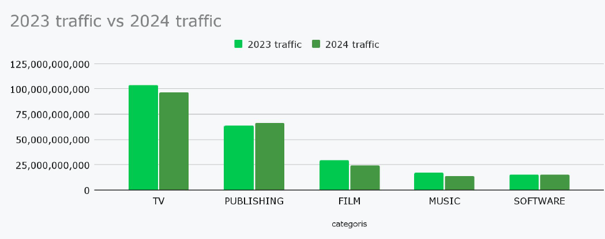
Piracy websites recorded 216.3 billion visits worldwide in 2024. Although the overall figures indicate a decline in digital piracy, trends across individual categories are far from uniform. Some sectors experienced substantial reductions in traffic, others remained relatively stable, while the publishing sector recorded an increase in demand for unauthorised content.
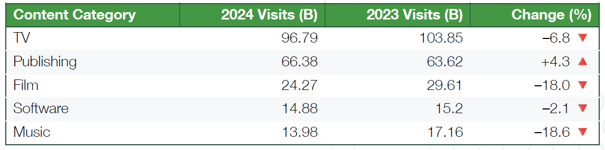
Television piracy remained the largest category, accounting for almost 97 billion visits. Despite a year-on-year decline of 6.8%, it maintained a considerable lead over the other sectors. Film piracy experienced a significantly sharper decline, with traffic falling by 18% to 24.27 billion visits.
The decline was slightly greater in the music category, whereas software piracy recorded only a modest decrease. Publishing content, by contrast, moved against the overall trend and was the only one of the five categories to register year-on-year growth.
The overall decline in piracy was also reflected in the average number of visits to piracy websites per internet user, which fell from 68.15 to 64.25. According to MUSO, this development was primarily driven by changes in the film, music and software sectors, where more sophisticated legal distribution models are gradually gaining ground. Television and publishing content, by contrast, have demonstrated greater resilience to the overall downward trend.
Streaming and Downloading Account for Almost Equal Shares
Although online piracy is primarily associated with the illegal streaming of films and television series, streaming is by no means the only significant means of accessing unauthorised content. In 2024, it accounted for just over half of global piracy traffic (50.4%), with the remainder attributable to downloading. The two methods therefore represented almost equal shares.
The ways in which users access piracy websites are also noteworthy. Almost six out of ten visits originated from direct traffic, while approximately three out of ten came from search engines. Social media, referrals from other websites, email and display advertising played a considerably smaller role, collectively accounting for less than one-tenth of total traffic. Importantly, these figures relate to piracy as a whole rather than exclusively to television and film content.
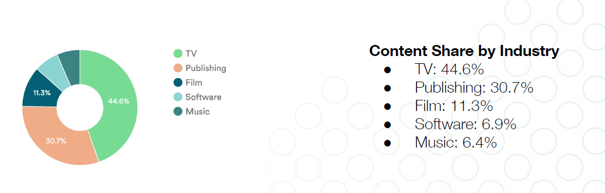
Television's dominance is further illustrated by its share of overall piracy traffic. Television content accounted for 44.6% of all recorded visits, representing almost half of the total. Film piracy accounted for a further 11.3%. Together, these two audiovisual categories generated more than half of all traffic to the piracy websites monitored.
Television Piracy Is Dominated by TV Programmes, Anime and Live Sports
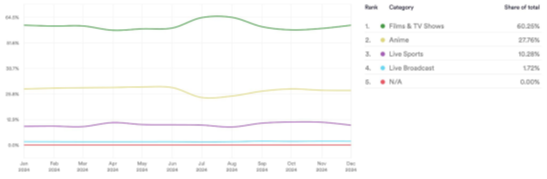
Approximately 60% of television piracy traffic falls within the subcategory comprising films and television programmes. However, anime also maintains a notably strong position. At the same time, the study assesses film piracy as a separate major category. Live sports broadcasts also account for a significant share of traffic, representing approximately one-tenth of the television category. Other forms of live broadcasting have a substantially smaller presence.
According to MUSO, anime is particularly susceptible to unauthorised distribution because of the high frequency of new episode releases and delays in the availability of officially localised versions. Differences in release schedules across markets consequently create opportunities for unauthorised distribution.
The relative shares of individual types of television content fluctuated throughout the year. In July and August, for example, the share of films and television programmes temporarily increased, while anime's share declined. Nevertheless, anime retained second place over the year as a whole.
Which Countries Generate the Most Traffic to Piracy Websites? The United States Leads
In 2024, the United States generated the largest volume of traffic to piracy websites, accounting for approximately 12% of the global total. India and Russia followed at some distance. Other major countries included Indonesia, Vietnam and Turkey.
The fifteen largest sources of traffic also included developed Western economies such as Canada, the United Kingdom, France and Germany. Piracy therefore remains a global phenomenon rather than one confined to less economically developed regions.
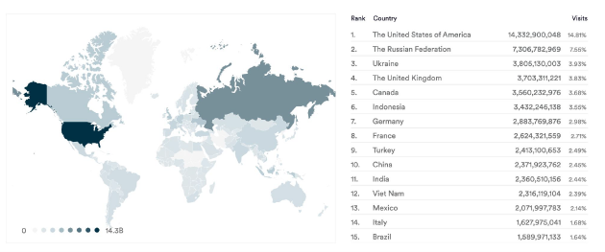
When the analysis focuses exclusively on television piracy, however, the country rankings change considerably. The United States retained its leading position in this category, recording 14.33 billion visits, equivalent to almost 15% of global television piracy traffic. Russia ranked second and Ukraine third, followed by the United Kingdom and Canada.
The differences between the two rankings are among the study's notable findings. India, which ranked second globally in overall piracy website traffic, placed only eleventh in the television segment. Conversely, Ukraine, which ranked tenth overall, rose to third place for television content.
The geographical distribution of piracy therefore varies substantially depending on the type of content involved.
Why Does Television Piracy Persist? Fragmentation of Legal Services Is a Key Issue
According to MUSO, one of the main factors sustaining high demand for unauthorised television content is the fragmentation of the legal streaming market. Films, television series and other programmes are distributed across different platforms, meaning that viewers may need multiple subscriptions to access the content they wish to watch.
The study's authors therefore argue that piracy persists partly because legal access to all desired content is not always straightforward.
The situation is further complicated by geographical restrictions and release windows, which result in titles becoming available in different markets at different times. While a television series may already be widely available in one country, viewers elsewhere may still be awaiting its official release.
For episodic content, particularly anime, MUSO highlights the importance of the combination of regular new episode releases and delays in the availability of officially localised versions.
According to MUSO, some users consequently turn to unauthorised sources when legal access requires multiple subscriptions or when content becomes available only after a delay.
Film Piracy Has Declined Significantly
While television piracy remains at a high level despite a moderate decline, the film sector has experienced a substantial change. Traffic to film piracy websites fell year on year from 29.61 billion to 24.27 billion visits, representing an 18% decrease.
According to MUSO, however, this development cannot be attributed solely to improvements in the availability of legal distribution options. Changes in film production itself also played an important role.
A significant factor was the 2023 Hollywood writers' and actors' strikes, which delayed numerous highly anticipated film projects. Their effects continued into the following year, when fewer major films were released in cinemas.
The release of highly anticipated blockbusters is typically associated with pronounced peaks in piracy website traffic. According to MUSO, the smaller number of such titles therefore contributed to lower demand for unauthorised films.
In addition to reduced production output, the study also highlights the transformation of film distribution, including the possibility of releasing films simultaneously in cinemas and on digital platforms.
According to MUSO, the decline in film piracy therefore reflects not only improved access to legal content but also the fact that fewer new releases with strong audience appeal entered the market.
How Much Revenue Could the Film Industry Be Losing to Piracy?
Although traffic to film piracy websites is declining, unauthorised viewing continues to represent a significant commercial challenge.
MUSO has therefore developed a tool called the Film Piracy ROI Calculator, which enables the potential economic impact of film piracy to be modelled.
Its calculations take into account traffic to piracy sources in individual countries, local cinema ticket prices and differences between theatrical and digital film distribution.
The aim is to estimate the additional revenue that could be generated by converting a proportion of unauthorised demand into legitimate viewing.
In one 2024 case study, MUSO estimated that converting all unauthorised viewing of an unnamed major film into legal consumption could generate an additional USD 440 million in revenue. This is, of course, a hypothetical scenario rather than a demonstrably incurred financial loss.
According to MUSO, piracy traffic data are not used solely for economic estimates. They can also support copyright enforcement strategies, for example by helping to prioritise the blocking of illegal websites or identify the most significant piracy sources.
In this context, the company uses its Piracy by Industry platform, which provides monthly updated information by country and content category. MUSO also states that it monitors active piracy domains in real time.
Other Sectors: Manga Is Growing, While Music and Software Piracy Are Declining
The publishing sector has followed an entirely different trajectory from television and film. Traffic to websites offering pirated publishing content increased by 4.3% in 2024, reaching 66.38 billion visits.
This was not an isolated fluctuation. MUSO's long-term data indicate that traffic to publishing piracy websites increased between 2020 and 2024, exceeding 261 billion visits over the five-year period.
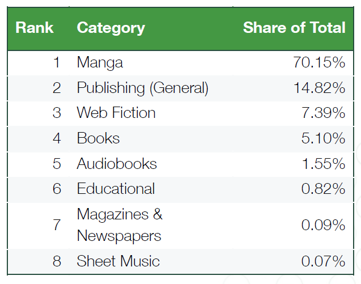
The principal driver of this growth is manga, Japanese comics that account for more than 70% of all traffic to publishing piracy websites.
General publishing content, web fiction and books follow at a considerable distance.
According to MUSO, growth is being driven primarily by global demand for manga, the rapid availability of unofficial fan translations and the expansion of serialised online literature.
The largest volumes of traffic in this category originated from the United States, Indonesia and Russia.
Music and software piracy, by contrast, have followed a downward trend, reflecting what MUSO identifies as more pronounced changes in legal distribution models.
Music piracy recorded a year-on-year decline of 18.6%, the largest decrease among all five categories monitored, while software piracy traffic fell by 2.1%.
The study's authors primarily associate these developments with the widespread adoption of licensed music services such as Spotify and Apple Music, the declining practice of illegally obtaining copies of content from streaming platforms, and the software industry's transition towards cloud-based subscriptions and secure application ecosystems.
However, mobile software piracy and regional pricing disparities remain persistent challenges, particularly in Southeast Asia and Eastern Europe.
Key Findings
The study demonstrates that the overall decline in digital piracy conceals substantially different trends across individual content categories.
According to MUSO, these developments are linked not only to the existence of legal alternatives but also to their pricing, regional availability and release schedules.
Several key findings emerge from the analysis:
- Television piracy remains the dominant category. With almost 97 billion visits, it accounted for 44.6% of global piracy traffic. Alongside films and television programmes, anime plays a significant role within this category.
- Film piracy declined considerably more sharply than television piracy. MUSO attributes the 18% year-on-year decrease partly to the smaller number of major film releases following the Hollywood strikes and improvements in the availability of legal distribution channels.
- The fragmentation of streaming services contributes to sustained demand for unauthorised television content. According to MUSO, the distribution of titles across multiple platforms, geographical restrictions and delayed international releases represent significant barriers to legal access.
- Trends in other sectors confirm that piracy is not a uniform phenomenon. While publishing piracy, particularly manga, continues to grow, music and software piracy are declining. MUSO links these differences, among other factors, to the evolution of legal distribution models.
Piracy traffic can also serve as an indicator of unmet demand. According to MUSO, data on unauthorised access to content can help identify opportunities that the legal market has not yet fully exploited, contributing to more effective distribution and copyright protection strategies.
About the Study: MUSO published its report, 2024 Piracy Trends and Insights, in May 2025. The publication draws on data on global piracy website traffic in 2024, analysed through the company's Piracy by Industry data platform. It covers five major content categories – television, publishing, film, software and music – providing year-on-year comparisons, geographical breakdowns and information on methods of accessing unauthorised content. The report also includes longer-term data on publishing piracy and modelling of potential film revenues. The published website visit figures should not be confused with the number of individual users or the number of titles viewed or downloaded illegally.
Source: muso.com