Statement of the Association of Commercial Television on the proposal for a regulation of the European Parliament and of the Council on the transparency and targeting of political advertising

Statement of the Association of Commercial Television on the proposal for a regulation of the European Parliament and of the Council on the transparency and targeting of political advertising

APRIL 2024

On Tuesday 27 February 2024, the European Parliament approved by a large majority in plenary the new rules on transparency in political advertising, following a political agreement on the regulation reached by the European Parliament, the Council of the EU, and the European Commission on 6 November 2023. The adopted legislation was also formally approved by the Council on 11 March 2024, the European Parliament signed the Regulation on 13 March 2024 and the Regulation was subsequently published in the Official Journal of the EU, entering into force 20 days after its publication.

The proposal was put forward by the European Commission as part of the European Democracy Action Plan to complement the Digital Services Act on the specific issue of transparency of online political advertising. The Regulation aims to address various concerns raised by the prevalence of online political advertising, such as the lack of transparency of individual advertisements and campaigns, the misuse of personal data, and the potential exploitation of these loopholes by political actors.

While we generally welcome the consensus reached on the adopted document, which has the potential to bring more transparency and ensure the protection of personal data in the environment of online political advertising, we must also express our concern that the text of the Regulation still contains a number of shortcomings that were repeatedly pointed out during the legislative process and that we as private broadcasters also commented on in our July 2022 statement. Although we believe that the Regulation was intended as a stepping stone to ensure transparency of online campaigns, the text of the Regulation has not fully met these ambitions (refer to the vague definitions that persist in the final text).

We appreciate that the final text of the definition of political advertising includes criteria based on remuneration, however, we must express some disappointment that the definition has not been clarified and the Regulation does not specify political advertising exclusively as online political advertising to avoid, inter alia, undermining or affecting the existing functioning regulatory frameworks and national definitions of political advertising since the internal market problems with regard to political advertising only concern the online environment as we have already stated in our previous comment.

On the other hand, provisions that we very much welcome and that were included in the final text of the Regulation after the negotiations on the wording are the clauses relating to political opinions expressed in programmes and the amendments adopted to ensure that audiovisual media services are not excessively affected, i.e. that the text of the adopted Regulation is not inconsistent with the AVMSD.

As regards the provisions on transparency, we consider it very beneficial that repositories have been included in the text of the Regulation; this step is essential to ensure transparency not only for individual advertisements but also for advertising campaigns. As we have stated before, we welcome the intention to address non-transparent political advertising and its impact on the democratic process and democratic society, we believe that internal market issues are fundamentally linked to the online sphere while traditional political advertising in traditional media – if it is allowed at all – is already limited to the national level and strictly regulated.

In our July 2022 statement, we emphasised as absolutely essential that online platforms should be directly responsible for any political or other advertising content shown to consumers through them and should make the assessment themselves rather than relying on third-party statements given that we as linear broadcasters have long been subject to such a requirement. Different rules contribute to inequality in the market, which we consider highly inappropriate. We believe that the adopted Regulation will resolve the most pressing inequalities that we pointed out in our previous statement.

On the other hand, we have to say that we welcome the clarifications contained in Article 15 where more effective mechanisms are introduced to ensure that all affected players “examine” and “make best efforts to examine” the sponsors’ declarations. As we have mentioned before, we as commercial TV broadcasters play a major role in informing the public by providing diverse, credible, and verified news and political coverage, all while being regulated to the maximum extent possible. There is no reason for digital platforms to shirk responsibility for the advertising content they select, place, promote, and ultimately profit from.

In conclusion, the final text of the Regulation has been significantly improved, supplemented, and linked to existing legislation (e.g. AVMSD, DSA, and GDPR) following the legislative process. Nevertheless, it still contains a number of provisions that are questionable and could be resolved during implementation. We consider it essential to ensure that the new rules are not counterproductive, hindering political expression rather than encouraging it transparently and effectively. Thus, while our statement points out many of the pitfalls of the Regulation, in general principle we welcome the effort to establish rules for online providers of political advertising services, even though in our view, this could have been achieved more appropriately, i.e. by adopting a regulation that would have maintained the existing frameworks for regulated (traditional) players and that would have applied fully equivalent rules for the “new” players who are not yet regulated.–

TWO MEN CONVICTED OF SELLING ILLEGAL STREAMING SERVICES

Two men who operated a business that sold unlicensed subscriptions to pay-TV sports channels have been given a 20-month suspended prison sentence.

Benjamin Yates and Lewis Finch, both from Worcester, were convicted of offences under the Copyright Designs and Patents Act 1988 and the Proceeds of Crime Act 2002.

The prosecution followed an investigation by Worcestershire County Council’s Trading Standards team with the Federation Against Copyright Theft (FACT) and BT Sport.

Test purchases by FACT and BT led to the case being referred to Trading Standards and entry warrants being executed at both their addresses.

An examination of IT equipment seized during the investigation confirmed that both men had been heavily involved in the provision of IPTV services with approximately 3,971 subscribers.

Further investigations of their PayPal accounts showed that payments of over £320,000 had been received over three years.

“This court result underscores the value of our collaboration with Worcestershire County Council’s Trading Standards team and our broadcast partners,” said Kieron Sharp, CEO FACT. “The individuals behind this illicit streaming service made a considerable amount of money through their fraudulent activities and this outcome serves as a stern warning to those who sell subscriptions or devices that provide access to content without properly compensating the rightful owners.”

Sharp said the organisation would continue to work with law enforcement and broadcast partner BT Sport, now TNT Sports, to combat illegal streaming services.

Source: broadbandtvnews.com

THE MAN LET PEOPLE DOWNLOAD MOVIES. HE FACES UP TO EIGHT YEARS IN PRISON

A 35-year-old man from region of Pardubice suspected by police of downloading 1 408 films and making them available for free distribution faces up to eight years in prison. He is said to have caused nearly CZK 60 million in damages to copyright owners.

According to the police, the man downloaded films from a data file repository, which he then made available for further download to people so they could obtain copies of them. “They could not only watch them repeatedly, but also dispose of them in other ways, such as making them available to other people,” police spokeswoman Dita Holečková said.

Police officers began investigating the case in 2021, when they identified the man and searched his home. They seized computer equipment, data carriers and recording equipment.

“Subsequently, we had expert reports drawn up in the field of cybernetics and the field of patents and inventions, economics,” Holečková said.

The man is charged with criminal offences of copyright infringement, copyright-related rights and database rights.

Source: novinky.cz

European Media Freedom Act (EMFA)

Statement of the Association of Commercial Television on the proposal for a Regulation of the European Parliament and of the Council establishing a common framework for media services in the internal market (European Media Freedom Act) and amending Directive 2010/13/EU

APRIL 2024

On 26 March 2024, the European Council adopted the European Media Freedom Act (EMFA), which aims to ensure media freedom and pluralism, as well as editorial independence. The EMFA is intended to create a common framework for media services in the EU internal market, to introduce measures to protect journalists and media providers from political interference, and to facilitate cross-border media activities within the EU.

As broadcasters associated in the Association of Commercial Television (AKTV), we have followed the whole legislative process very closely and have been actively involved in the discussions on the amendments, both on our own behalf and through the multinational professional associations with which we work, because we understand that the regulation could affect not only broadcasters but also the entire media market in the European Union in a fundamental way.

Last year, we already commented on the then draft regulation to the effect that we understood the objectives pursued by the European Commission in putting forward the EMFA proposal, although we considered loosening of the existing regulation rather than further regulation of the market to be a more appropriate solution. In the aforementioned statement of April last year, we drew attention to the potential positive benefits that we saw in the EMFA text from the outset, despite the above facts. However, we also pointed to provisions that needed to be refined in our opinion to comply with existing legislation and to take into account the practical expectations of the market.

In particular, we saw the shortcomings of the wording of the draft regulation in the setting of unequal obligations of online platforms in comparison with the obligations of traditional media, since online platforms are in certain aspects direct market competitors to traditional media competing for the same range of entities or financial allocations. In this respect, EMFA has undergone significant changes to ensure that transparency rules generally apply to all media market players. Therefore, we have to mention in this context that we appreciate the explicit inclusion of online platforms in the relevant articles, namely merger control, audience measurement and state advertising. Although we are of the opinion that the definition of audience measurement still contains some problematic points to be clarified, on a global scale we find the compromise reached to be acceptable in this respect.

We consider it very important that the regulation does not interfere in any way with the freedom of expression and does not provide any means for Member States to regulate the editorial content of the media; on the contrary, it expressly prohibits such interference (Article 4(2)). Any attempts to regulate editorial content would pose a major risk to democracy and open the way to abuse. The regulation recognises the importance of self-regulation, which is, among other things, in line with the overall support for self-regulatory initiatives in the European Democracy Action Plan. We will therefore support meaningful self-regulation where it makes sense from the perspective of preserving freedom of expression and a fair media environment and does not lead to editorial independence being affected.

In this context, it is worth recalling the much-discussed power of the European Commission to issue implementing guidelines in certain areas, but in this respect, it is probably premature to assess the impact of the relevant provisions in any depth. Practice will show whether this instrument will serve to preserve the democratic principles of European society. Member States should therefore go further and introduce more robust safeguards to protect media freedom and pluralism and the rights of journalists as a precautionary measure.

The last provisions of the regulation that we want to mention are those that contain safeguards to protect journalists and their sources, an approach to protecting editorial integrity. Editorial independence is a fundamental condition of democracy and guarantees the possibility of unrestricted and critical public debate. In this respect, the regulation recognises both the need for assured freedom of editorial decisions and the need to follow established editorial lines. In general, we would consider any additional interference in the relationship between the publisher and the editorial team through possible further regulation to be counterproductive and detrimental to media freedom and pluralism.

As for the protection of journalists and the sources they use for their work, these sections have been the subject of great debate in many forums and at many levels, right up to the very end of the legislative process. We are concerned that the power to use spyware in the public interest is very broadly defined in the regulation, raising concerns that it may give Member States a great deal of leeway in certain situations without clearly defined boundaries.

There is probably no need to argue that independent media services play a unique role in the internal market. As we have pointed out many times, broadcasters were sufficiently regulated even before EMFA, including voluntary regulation through self-regulatory mechanisms; however, we have to accept the fact that Member States have agreed to further EU regulation. It is usual for any new regulation to be tested by the application practice; in this case, it will be the market of the entire European Union with different media service providers. The evaluation mechanisms are already envisaged now, they are supposed to start in autumn 2029, and although they are primarily focused on the evaluation of the functioning of the European Board for Media Services, which replaces the current regulators group ERGA, we assume that this will not be the only issue addressed and the EMFA will be evaluated as a whole in terms of functionality and adequacy.

In conclusion, we consider it appropriate to emphasise that we believe that the European Media Freedom Act will meet the expectations in the most fundamental respect, i.e. it will successfully target the efforts of politicians to interfere in editorial activities or influence the independence of the media. This is the main objective that we expect the new regulation to achieve, and this is where we see its main future role.

MAY 2023

As the Association of Commercial Television (AKTV), we understand that the European Commission’s objective in presenting this proposal is to ensure that media service providers are able to provide their services freely and independently in an open and transparent market, a market that allows for a plurality of media actors and opinions, and we are aware that independent media services play a unique role in the internal market. Although we believe that there is no need for further regulation for broadcasters, and we have already pointed out that we would prefer deregulation, if there is a consensus in the European area that regulation should be adopted, what we need to address in particular are the practical implications for broadcasters.

There are a number of provisions in the proposal which, although not necessary, can contribute to ensuring that independent media services continue to play a unique role in the internal market and keep on performing their rightful role in a democratic society. Broadcasters provide citizens and businesses with access to a plurality of views and reliable sources of information, and this principle must be maintained going forward. It seems logical to us that not only traditional media – i.e. offline media – but also online media are covered by the proposal.

In this context, we believe that it is legitimate for the Commission to support the self-regulatory initiatives of the media sector, as explicitly highlighted, among other things, in the European Democracy Action Plan. We see great potential for this path in the future and prefer it to legal regulation.

We see potential benefits of the proposed regulation in the provisions on state advertising and believe that a broad definition of state advertising under Article 2 (15) is legitimate.

The proposed provisions governing requests for enforcement of obligations by video-sharing platforms under Article 14 regarding the enforceability of obligations imposed on video-sharing platforms are positive in our opinion.

In principle, we appreciate the support for the protection of the media from external political pressure, and we believe that the suppression of the traditional ‘marketplace of ideas’ and the enforcement of self-censorship should also be regarded as such pressure.

However, we found several points in the proposal that should be refined or reconsidered so that their meaning contributes to the mission and objectives that were at the origin of the idea to introduce the regulation. We are of the opinion that the primary concern must be to strike a balance between the existing national arrangements of the Member States and the harmonisation level, i.e. that in no case should existing national standards be decreased.

As regards the general principles established by the draft regulation, namely that the Commission will issue implementing rules to ensure its implementation, we believe that this intended principle should be reconsidered very carefully and then revised for the sake of preserving the democratic principles of European society.

From a purely practical point of view, we see Article 6 (2) and the related introductory provision (20) as problematic, as we are concerned that the application of the provision on the requirement of editorial independence would bring possible complications in practice, leading to questions as to which person is ultimately responsible. Editorial independence is a fundamental condition of democracy and guarantees the possibility of unrestricted and critical public debate. We consider any interference in the relationship between the publisher and the editorial team through EU regulation to be counterproductive and detrimental to media freedom and pluralism. Editorial independence should strictly distinguish between the individual decisions of the editor (these decisions must remain free from any influence) and the general line of editorial activity, which is the responsibility of the broadcaster or the editorial management. However, we are of the opinion that this disparity could be resolved simply in principle if the text of this Article becomes a soft law recommendation.

According to the Amsterdam Protocol, the organisation and definition of public services, as well as their financing, is a national competence. The regulation of public service therefore varies from state to state and it is a very sensitive area. It might even be worth considering the option to support the text of Article 5 (3) ‘Safeguards for the independent functioning of public service media providers’ more strongly by making explicit reference to the principles of the Amsterdam Protocol in the term ‘public service remit’.

Article 8 establishes the European Board for Media Services (the “Board”). The proposed regulation must explicitly ensure that the Board is an independently functioning body (including independence from the European Commission) capable of taking its own decisions as a collective body bringing together independent bodies to ensure the implementation of the relevant provisions for independent media. Therefore, it must be guaranteed the power to manage its internal affairs, such as creating its own procedural rules. The independence of this body will thus also result from its organisational set-up. We are of the opinion that if the Board takes a view different from that of the European Commission, it must be within its remit to present such a view and not to align its opinions with the European Commission. We also consider the further provision that the Board draws up opinions in agreement with the European Commission to be, at the very least, unfortunately worded.

With regard to the extended supervision of mergers of companies contained in Section 5, we believe in this respect that the existing level and system of regulation is fully sufficient and that there is no need for further EU regulation and we are of the opinion that it should be up to the national states themselves to best assess the impact of the transaction on possible media pluralism. We consider any intervention in this area in the form of the proposed regulation, including through the powers conferred on the European Board for Media Services, to be unnecessary and counterproductive. The provisions dealing with media concentration in the draft regulation are based on the assumption that media concentration is primarily detrimental to media pluralism. But consolidation in the media market is a natural and necessary part of the market environment in which media companies operate. Consolidation is in many cases necessary for sound business management and economic decision-making by business entities. Such decisions are often directed at how to adapt to a dynamic environment or avoid negative economic impacts on a particular company, how to secure jobs and, ultimately, how to safeguard media pluralism. Any further restrictions and requirements concerning the ability of media to merge would further exacerbate the asymmetry between traditional media houses and big-tech platforms in the battle for identical advertisers. Regulation that would impose further restrictions on mergers and acquisitions would not promote media pluralism – on the contrary, it would hinder it.

We also appreciate that the text of Recital 45 of the justification explicitly addresses the issue of audience measurement and its impact on media funding, stating that audience measurement has a direct impact on the allocation and the prices of advertising, and perceives the asymmetry between traditional media service providers and new players in the market (particularly online platforms). However, in our view, this perception is unfortunately not reflected in the wording of Article 23, as its text does not correspond to the objectives set out in the Recital, namely that access to objective audience data stemming from transparent, unbiased and verifiable audience measurement solutions should be provided, taking into account the competition that takes place in the market not only between the same types of media but also between the aforementioned groups of competitors. In a situation where some competitors use their own audience measurement solutions that are not subject to market control and are not sufficiently transparent, it is imperative that Article 23 be further clarified to meet the objectives and ideas contained in the Recital. The latest available draft version of this provision still lacks an explicit reference to the principles of industry standards, self-regulation and market governance. A deeper impact analysis still needs to be carried out concerning the newly proposed obligation to provide viewership data free of charge to media service providers in relation to their content and services.

Finally, a last remark on the audience measurement provision of Article 23: we assume that with respect to the practical application, the use of cookies will be allowed for these purposes.

PUBLIC SERVICE MEDIA SHOULD NOT PROFIT FROM ADVERTISING, SAYS THE ASSOCIATION OF COMMERCIAL TELEVISION

Media manager Klára Brachtlová has been the head of the Association of Commercial Television (AKTV) for a year. The Association was founded by the Nova, Prima, and Óčko TV groups seven years ago. In an interview, Klára Brachtlová reveals how the Association helps TV stations, how broadcasters are coping with the advent of artificial intelligence, and why commercial media opposed the amendment to the law that increases fees for Česká televize (Czech Television, ČT).

AKTV celebrates its seventh birthday and you have been in office for a year. How would you evaluate this period? What went well? And is there anything that hasn’t worked?

Seven years ago, AKTV was established as a brand-new common platform for commercial television with the aim of becoming a partner to state institutions in the development of legislation and being a unified ‘voice’ for television. We know our sector and are able to assess well and quickly the potential impact of external influences, such as legislation. The second pillar of our activities has been to promote television as an advertising media type.

What was your focus?

Initially, we placed more emphasis on promoting television as an advertising medium, communicating the latest trends from around the world, and educating people on what works best on television. We are members of multinational European industry associations, so we have a lot of global information and bring it to the Czech market. However, over time more and more emphasis is put on the role of AKTV as a partner in legislative and regulatory processes.

Is it because more and more media laws are being prepared?

Quite a lot of media-related legislation is currently being drafted in the Czech Republic and more is coming to us from Brussels where more than two-thirds of the regulations concerning the European region are being prepared. So over time, our activities have shifted a lot towards Brussels so that we could monitor the EU’s media regulation priorities at an early stage, and I think we are successful in this respect. One example is probably the last EU action before the elections, the European Media Freedom Act (EMFA). This is something where we were at the very beginning.

At the very beginning? How exactly? Did you comment on the document?

We have already been to the first consultations and Commissioner Věra Jourová presented us with the initial proposition of the document. Although this is another media regulation that we do not welcome enthusiastically in the already heavily regulated audiovisual media sector, the final version of the EMFA seems to be a reasonable compromise.

Will it have some positive effects?

That remains to be seen. For example, Brussels has recognised that in all areas where effective self-regulation exists in EU Member States, self-regulation can be preferred to regulation in the topics covered by EMFA. This includes topics such as the protection of freedom of the press.

And what about restrictions?

Television and radio have already been highly regulated industries, so we don’t see major changes yet. EMFA is a set of tools that are activated at some point. One example is the purchase of media, which in many cases is a below-the-limit transaction not subject to the approval of the Office for the Protection of Competition. EMFA puts in place mechanisms to prevent, for example, a large group threatening media pluralism in a particular region.

Is it in effect?

Last week (17 April), the EMFA was published in the EU’s Official Journal and will apply from August 2025. Now the Member States have their work cut out for them. They have to look at how they will be affected by EMFA, which laws will have to be amended and how. In the Czech Republic, we do not even know yet who will be responsible for the various parts of the Act.

In seven years, you have managed, for example, to suppress storage sites like Ulož.to and to enforce the protection of Prima and Nova’s works in court. What are you facing now?

Unfortunately, illegal sharing of our content is still a hot topic. As far as legislation is concerned, there are some shifts; last year, an amendment to the Copyright Act came into force, which aims to better protect copyright works. We are also seeing shifts in the rhetoric of state officials. They have finally started to see piracy as a real issue that is causing a huge amount of money to leak out, not only for content creators but also for the state.

What amounts are we talking about?

From hundreds of millions to several billions per year. It should be taken into consideration that economic damage is also caused to institutions such as the Czech Film Fund or the National Film Archive, which exercise and trade the rights to large libraries of Czech films.

Finally, piracy is part of the grey economy and tax evasion can also occur because the operators of so-called storage sites are often based outside the Czech Republic. Nobody denies that, but nobody really wants to meddle in this phenomenon because it is a complex matter. The biggest problem we have is judicial enforcement.

The technical aspects of illegal content distribution are evolving faster than the courts are deciding.

Yes, that is definitely a problem. If we want to protect one TV season and, say, the three most attractive titles in court, we are talking about litigation for several years. But in the meantime, we have other seasons running. So this route is not efficient enough for us at the moment and is difficult to use.

Are you ready for the arrival of artificial intelligence?

Technological development is relentless, and I hardly know anyone who hasn’t tried one of the artificial intelligence (AI) tools. It is undeniable that in all fields, including media, the use of AI offers a huge opportunity. For us, for example, it is in the areas of content editing, analytics tools or content quality control. It can be and has already been used for content creation but in this respect, I would be cautious because these generative models only work with what already exists, what they have “learned” somewhere.

A separate issue is the so-called deep fake, where an existing person is exploited, in the field of both photography and video, and we don’t even know about it. The media is already starting to face this, not only in the textual use of AI but also in image misuse. One such case is now being dealt with by colleagues at Prima. They have had a CNN Prima News story misused.

Television is probably affected a lot as anything can be remade there. On the other hand, on Prima, for example, AI has started subtitling programmes for the audience with visual and hearing impairments.

The use of artificial intelligence for the preparation of audio descriptions is a very effective way to make broadcasts accessible to as many disabled viewers as possible. Colleagues at Nova use AI to create additional sports content, such as highlights.

Is it supported by legislation?

In the EU, the so-called AI Act is being finalised, which deals with AI in a rather general way and does not yet address the issue of copyright. The European representation is saying: yes, we will complete this law and, in the period ahead, we will look at how AI will affect other areas and, if necessary, give it more precise rules.

How is the media perceiving this?

From the media’s point of view, it is primarily a matter of self-regulation and ethical use of these tools. That is, if we use AI to create content, it should be clearly labelled from the perspective of the user or viewer.

The UK’s BBC, for example, goes even further and says that the viewer or user should know why AI was used in a given case. This is a huge challenge and opportunity for the whole world, including the media, but we need to be very careful how, at what point in time, and for what purpose we use these tools.

Won’t AI move to a different level long before the legislative process begins?

Of course, legislation cannot keep up with this rapid development; self-regulation is and will be crucial.

The trend in television viewing is changing, time-shifted viewing is on the rise, people no longer wait in front of the TV in the evening but watch their favourite shows when they have time. How are commercial TV stations reacting to this?

Yes, it is a global trend, television is undergoing a long-term transformation as the way we watch content changes. Audiences are less with traditional linear TV, which they tend to use to watch live content, such as news and sports. They are more likely to watch other content at a time they choose and on devices other than the traditional TV screen.

Is TV changing then?

Television is actually a very modern and flexible medium; in addition to classic linear broadcasting, we can get content to viewers through services such as VOYO or prima+, which extends our reach to include younger target groups for whom the TV screen is no longer the centre of the living room and family entertainment.

So linear TV is not going to disappear, is it?

Definitely not. In the United States, we are even seeing a kind of over-saturation and fatigue with the plethora of content on hundreds of VOD platforms and a return of viewers to traditional television. However, it is clear that linear TV is gradually being replaced by other ways of watching content, and commercial broadcasters are adapting their distribution mix accordingly.

This is a trend, and it is going faster in Western Europe than, for example, in the regions of Central and Eastern Europe. Over time, the target group that will consume the content is also changing. But its charm, broadcasting now and here, will remain.

The way we watch TV is changing. Are there any changes for advertising or advertisers as well?

Television still offers the biggest reach to advertisers, it is an effective branding tool. The best proof of this is the fact that even e-commerce brands are among the biggest TV advertisers because online presence and communication are not enough for them. We have recently completed a study in AKTV under our ScreenVoice brand on the attention viewers pay to advertising.

It is proven that the more attention a message can attract, the better it is remembered. And that in turn has a secondary effect on your purchasing decisions. Television advertising came out best in the comparison because, unlike internet advertising, people cannot skip it and they see it much more often on the big TV screen, so they get a good perception of the brand.

Now everything is speeding up. Is there a move away from 30-second ads to shorter sponsor messages? Are the ad blocks getting shorter?

Television is narrative, in a longer spot you tell a story perfectly and convey emotion, moving or entertaining the audience. In addition, viewers see the advertising message alongside their favourite content, which is also a big advantage. This is much harder to do in a shorter spot or sponsorship message. But of course, it depends on what the advertiser wants to achieve in a particular campaign.

At the beginning of September, the Minister of Culture introduced an amendment to the Czech Television and Czech Radio Act, which regulates the amount of fees. AKTV demands its withdrawal. Why? Have AKTV’s representatives had any talks with the Minister of Culture or other politicians? What specific changes have they put forward? How successful have they been?

The Ministry of Culture held a press conference to present an amendment that no one had any idea about. Together with other colleagues from the commercial media, we objected to the proposal because it would be good if such a fundamental amendment was discussed with all the market players concerned.

It may look like this only applies to public service media, but it doesn’t. Public service media are part of a fragile ecosystem, a dual system, which also includes commercial media. The dual system is important for maintaining media pluralism. For the media sector to be sustainable and predictable for all players, the implications of the changes under consideration need to be well thought out.

Is that why you are asking the ministry to open a discussion?

Yes, that is why we have asked the Ministry of Culture to put the legislative process on hold and to start an expert discussion. This happened, and working groups were set up, one for television and one for radio.

We started working at the end of January when we basically exchanged arguments on what we consider essential for the functional coexistence of public and commercial media. We are still waiting for feedback, the Ministry of Culture is obviously working on something but unfortunately, we don’t know the current situation.

Why are you protesting? What is this all about?

As I said, public and commercial media stand side by side. And each has a different mission. The mission of public service media should be enshrined in a proper definition of public service, and we say: let us look at the definition of public service.

Can you be a little more specific?

In our opinion, it is appropriate to ask whether ČT should invest huge sums of money in, for example, very expensive sports competitions that are usually broadcast abroad by commercial sports channels. It is understandable that if viewers have become accustomed to such free content available on ČT4, it would be very unpopular to stop broadcasting it.

This takes us back to the public service and its definition. And the second key issue for us is the sustainable financing of all entities in the media ecosystem. Commercial media are dependent on advertising revenue for their livelihood. That is why we believe that public service media should be funded either by licence fees or by the state budget and should not have the tendency or the possibility to profit and generate revenues from advertising.

Are you waiting for a response from the ministry?

Yes, at the moment, we are waiting for the Ministry of Culture to give us an update. We are still hoping to reach a compromise result that will ultimately ensure the sustainable functioning of both commercial and public media. This is also a topical issue with regard to the EMFA we have talked about. One part of it concerns the functioning of public service media and the sustainability of their funding. So it needs comprehensive consideration and honest effort.

Are there representatives of ČT in the working group?

Of course, there are Czech Television and Czech Radio and also representatives of other commercial media there. We are there together.

From a layman’s point of view, you seem to work to remove advertising from ČT and cut its profits.

We are asked whether we want to eliminate the public media. That is certainly not our goal. For us, coexistence with them is very important, especially in today’s complex geopolitical situation. We have been saying the same thing from the beginning. Let’s look at this conceptually, let’s define the role of the public service media, and then we will work out how much money they need.

Not the other way around, we will add two billion and you will tell us what you will do for it. We don’t want to weaken ČT by taking away advertising, that is only a small part of it. In terms of commercial messages, the bigger issue for us is sponsorship. The sponsorship messages on ČT are now almost interchangeable with the advertising block. Although the law is not breached, it is de facto being circumvented in this way, and we do not think that this is how it was originally intended.

Your next topic is the transformation of the Czech Film Fund. What stage is the process at? And are you also working with the Ministry of Culture on it?

Yes, this process was exactly the opposite. For the transformation of the Audiovisual Fund, the Ministry invited us to a debate and a working group was formed before it was officially established. Negotiations continued for almost a year, and on some points, a fairly reasonable compromise was found.

However, in our opinion, for some others, the discussion was not completed, and the ministry suddenly came up with a proposal which it has already sent to the legislative process. But there are problematic points in the amendment that I would call almost discriminatory.

Can you give us an example?

The fund is financed by contributions from commercial entities, TV stations, operators, cinema operators and, in the future, VOD platform operators. Until now, the biggest contributor has been commercial TV, and our fee has been defined as a percentage of advertising revenue for traditional linear TV and also a minimum collection of CZK 150 million.

This means that if that percentage of advertising revenue didn’t add up to 150 million, the commercial TV stations had to pay 150 million. For example, in the COVID period when the commercial TV stations were really in trouble because of the outflow of advertising revenue, we also paid 150 million.

Will this change?

Commercial TV is the only one that has that minimum threshold. We have sincerely hoped that when the whole system of support for audiovisual content is being reconfigured this would be an ideal opportunity to level the playing field and not discriminate one media type against another or one type of taxpayer against another. The Ministry of Culture understands this but unfortunately, this discriminatory principle is still enshrined in the law.

What will the law change?

In the proposal, we appreciate that under the new system of operation, foreign VOD operators should also contribute to the fund. Until now, we were the only ones to pay for VOYO and prima+. On the other hand, services such as YouTube or Facebook, which do not meet the legal definition but which undoubtedly contain a large amount of audiovisual content, are not subject to the levy.

So that is another discriminatory element, local players have to make contributions from advertising revenue on web platforms while the big multinational players are not affected. It is probably also food for thought that not all the players who draw incentives and benefit from the state support system for audio-visual content are contributing to the system. On the positive side, however, the amendment should finally make it possible for us as the largest investors in audiovisual content in the Czech Republic to draw support for television formats.

Officials understand that sharing illegal content also leads to the leakage of government money. With the rapid development of artificial intelligence, legislation cannot keep up.

Author: Jitka Venturová

Source: idnes.cz

THE ASSOCIATION OF COMMERCIAL TELEVISION CELEBRATES 7 YEARS, KLÁRA BRACHTLOVÁ REMAINS ITS PRESIDENT

The Association of Commercial Television is celebrating its seventh anniversary this spring. Its main priorities remain the promotion of TV as an advertising media type, the fight against internet piracy and participation in legislative processes affecting the business of commercial broadcasters. Klára Brachtlová, Chief External Affairs of CME, the owner of TV Nova, remains its president for another year.

For seven years, the Nova, Prima and Óčko television groups have been members of the Association of Commercial Television, which was founded to unite the voices of commercial broadcasters.

One of the main activities of the Association is the promotion of television as an advertising medium. For this purpose, AKTV has created the ScreenVoice brand and a website of the same name, providing interested media agencies and advertisers with the latest information and trends from the world of television advertising. In addition to foreign content, interested parties can also find a range of original texts on various attractive topics on the website.

“The most popular content on the ScreenVoice website has long been myths and facts about television where we debunk the most common prejudices against television. Readers are offered data and arguments proving that television is an effective advertising medium and, in many cases, still has absolutely unparalleled performance compared to other media types,”

says Klára Brachtlová, President of AKTV.

Last year AKTV became a partner of the most important industry conference Forum Media whose participants had the opportunity to learn about the findings of AKTV research on the topic of attention in advertising. On the occasion of World Television Day on 21 November, AKTV prepared a unique programme for its business partners, which culminated in the entertainment show We Love TV hosted by Libor Bouček.

Another focus of activities is the role of AKTV as a partner in the legislative field, at both national and European levels. In the past period, AKTV has been actively involved in the process of drafting several pieces of legislation, in particular the amendment to the Audiovisual Act and the major media amendment.

“Sustainability and a fair playing field for all players in the media market are absolutely crucial for us. That’s why one of our top priorities remains the fight against online piracy, which drains significant resources from the creative ecosystem. Instead of going back to the creators, this revenue goes into the pockets of the repository operators where piracy is most rampant,”

adds Klára Brachtlová.

To spread awareness about the illegality of sharing copyrighted content, AKTV operates a special section on its website dedicated to copyright where interested parties can find information on legal and illegal content consumption, a glossary of terms, or the latest copyright news.


VOYO IS GROWING FASTER THAN EXPECTED, REPORTING AN OPERATING PROFIT, SAYS NOVA CEO DANIEL GRUNT

Daniel Grunt, who has been CEO of the Nova Group since January last year, has been given a difficult management assignment by the parent PPF Group. He is to transform the most-watched domestic broadcaster so that it can capitalise on the growing interest in online video while not cannibalising traditional broadcasting. Grunts task is to develop the Voyo paid streaming service while not competing with the traditional business that brings Nova billions of crowns from TV advertising.

Voyo has been at the centre of a transformation in recent years to bring the TV group into the new digital age. The streaming video library has been testing viewers’ willingness to pay for Nova’s shows, series and films since 2013, but the main impetus came three years ago after the TV group was bought by PPF. The new owners have announced an ambitious goal for Voyo: to acquire one million subscribers for the video library in the Czech Republic and Slovakia by 2025. Grunt tells HN that interest in Voyo is growing so fast that the project may reach the million subscriber mark sooner. It already has more than 800,000 paying viewers in both markets combined, and the project is starting to generate an operating profit.

“My managerial task is to ensure that our media house continues to grow in a market where the amount of time spent on traditional linear broadcasting is declining every year. That is, how to realign the company, products, content distribution and strategy to ensure long-term profit growth,”

says Grunt.

The owners probably chose you for the position of Nova’s CEO last year because you were responsible for the development of the Voyo streaming service in various markets as Chief Digital Officer. That was within CME, the group to which Nova belongs. Will your approach be any different from the previous management of the broadcaster?

In general, my aim was not to make a revolution in Nova. It is a very well-functioning media group that is profitable. My perception is that I have been given a relatively free hand by the shareholder for the digital and strategic transformation of Nova. The way video is consumed is changing, technological changes are occurring, bringing many threats and many opportunities.

Which changes do you see as the main ones?

The deployment of smart TVs has been growing rapidly in recent years. More than half of Czech households now have a smart TV connected to the internet. This gives users a range of possibilities – they have apps, or video on demand. The second factor is that the TV signal distribution via the internet (IPTV), which enables time-shifted viewing, is growing quite rapidly. So fewer and fewer people are watching traditional linear television. People watch programmes at times of their own choosing that suit them best.

We also see the growth of all the other smart devices, the growth of high-speed internet penetration, and data bundles. In short, people are consuming video content where and when they want, which was accelerated by the COVID pandemic. We started to promote Voyo heavily in 2021, making investments in content, teams, the platform, and other things.

What is Nova’s strategy in general?

It has four pillars. The first is to ensure that existing advertising revenues from linear TV are at least maintained. The second is to achieve maximum content reach – i.e. combining traditional broadcasting with time-shifted viewing or consumption via Voyo so that the two distribution channels compete as little as possible. The third pillar is working with brands. Nova is historically an extremely strong brand but recently, no time and energy has been devoted to making the brand well profiled and targeted at specific segments. This includes an effort to clearly profile Nova’s main channels and Voyo. And you can’t do without a good team to work on all this. That is the fourth pillar.

Your competitor Prima is also going the way of better defined and profiled channels. When will viewers notice the changes on Nova?

The audience will see the specific results this year because we spent last year mainly working on internal issues, we wanted to define everything clearly to ensure that it made sense. We are working on the redesign of the main channel and the Nova Cinema channel. That will be a highly visible signal of where we are going. Then other channels will follow, some of which have already been redesigned. We will work harder to make our channels as clear and understandable as possible for viewers. So that they know what they are going to find on them and for whom the channels are intended.

How fast is the viewership of classic television declining?

When we look at a metric called Total TV Ratings, which is actually the time people spend watching classic TV, in our key target group – 15 to 54 year olds – it started to decline significantly last year. The year-on-year decline was about six or seven percent. But at the same time, the time spent by time-shifted viewing is growing proportionately. But not always is it included in the classic linear viewership.

So what are you doing about it? How do you address it?

First, we need to work on getting a bigger share of a smaller viewership pie. In this, we were successful last year. We increased our lead by one percentage point compared to our main competitor. That is a pretty good result in TV ratings. On the all-day viewership, we gained about three-tenths of a percentage point to 33.64 per cent last year. This is important for us because we sell at a premium price. And such a price is justified by the fact that we have a better, more attractive target group and that there is a bigger gap between us and our competitors.

The second point is that we have a product that is in demand, so we logically increase the price of TV advertising. For this year, we came up with a double-digit increase. This will enable us to grow in the traditional part of the TV business in the long term. We have made projections for several years ahead and we estimate that in 2030 our advertising revenue from the traditional linear business will still be at least half of the total. Currently, it is around 75 percent.

How does your investment in Voyo fit into all this?

We are trying to maintain and, if possible, increase traditional revenues to be able to finance our transformation. Voyo is growing extremely. In fact, it is growing every year far beyond our already quite ambitious plans. The revenue from Voyo is starting to be quite an interesting contribution to our TV business. In terms of operating profit, Voyo already earned its keep last year.

Are you considering putting online advertising in Voyo as well?

It is a path that we will probably have to take at some point, but it won’t be this year and most likely not next year either. That reasoning is based on what I said: Voyo is growing very well. In general, the SVOD market (pay video services from HBO, Prima, Netflix, Disney, SkyShowtime and other, which includes Voyo – ed.) in the Czech Republic is still growing at a double-digit rate, up some 26 percent last year. Voyo grew by about 51 percent last year. If we look at this year, the market will grow by about 20 percent, we should still grow faster than the market.

It looks like the growth rate will be quite interesting for the next few years. And one of the main motivators for customers to pay for such a service is that there are no ads. If you include advertising, the growth will slow down. Moreover, in the Czech Republic, the price for digital video advertising is relatively low, for example, compared to the US and Western Europe. It would not compensate for the slowdown. We are watching to see when the market starts to slow down. Then it would make sense to add a cheaper product to Voyo with advertising.

People in the TV industry look at what is happening in more developed Western markets, for example in Scandinavia, and from that they estimate the trends that will come here in a few years. The Swedish streaming company Viaplay, in which PPF has also invested, is struggling with losses. Last year it announced drastic staff and cost cuts. Their subscriber numbers have dropped as well. Isn’t this a warning signal that something like this could happen here?

It is definitely a warning. In my opinion, it is not the result of changes in the market but rather of a wrong strategy. Viaplay has made it their main goal to get as many subscribers as possible at any cost. And they chose the easy way – to get them through partners, such as telecom operators. They were giving relatively large commissions to partners, thus reducing their own profitability. The second thing is that in order to grow quickly and build the brand, they made extremely large investments in content – in sports and especially in creating exclusive content for the platform. If they were doing something like 70 Viaplay originals a year, that is a huge investment. They reported a very high number of subscribers, but the profitability was lacking.

Is there anything else of interest to you that is happening in the TV market in the West?

Of course, we are watching what is happening in Scandinavia, in the US, but it does not mean that it will all be here in three or five years. Western players like Warner Bros., Disney and others are still changing their strategy, they are still fine-tuning. Three or four years ago they chose the strategy of investing in their own video libraries at the expense of their existing business. They have tightened the taps in terms of, for example, licensing their content to other TV stations. Another thing is that these players have almost closed the classic cinema distribution window that was producing huge money. But after two years, they found the same thing Viaplay did – that they were growing fast but getting into big losses. So last year, they took a step back and are returning to their original approach, extending the cinema distribution window for films, then offering films on Blu-ray or pay services, and refocusing on licensing their content to other TV stations or subscription services.

What lessons have you learnt from this?

That it is important not to fly from right to left, from extreme to extreme, but to look from the very beginning for maximum long-term profitability. It’s about balancing the existing business and the new one so that in trying to grow the new one quickly, which can be a nice story, you don’t accidentally kill the old one because then you cannot fund the new things. That’s why I talked about our four-pillar strategy at the beginning, which is to keep or mildly develop the traditional business at all costs.

Has Voyo overtaken Netflix in the number of subscribers in the Czech Republic?

No, it hasn’t.

You announced that Voyo had 800,000 paying users in the Czech Republic and Slovakia in March. Can you give me a figure for the Czech Republic only?

I am sorry we don’t publish it. We create Voyo strategy for both markets together, so we present it together. However, Netflix is still bigger. But we don’t even aspire to be number one. The strategy is that we want to be the strongest local player, we want to be number two in the market and complement the multinational number one. That works well for us.

The goal for Voyo, as initially announced, was to have one million subscribers by 2025 at the latest. You can probably achieve that goal sooner, can’t you?

It looks like we are a year ahead. We are getting significantly faster. I am becoming more and more confident that we will hit one million next year.

Consumer demand in the Czech Republic has been very poor. People have feared inflation and energy prices. Households have cut back on excess spending. How come it has not translated into Voyo growth?

My explanation is that Voyo costs only CZK 159 a month, it is quality entertainment for a few crowns for the whole family – over two thousand titles, our own production, series, romantic stories, two sports channels, reality shows such as Survivor, Big Brother and more. We have even got a kids’ offer. Plus, we are constantly creating new Voyo originals for Voyo. And there is TV content a week earlier and without commercials. So where would a household save money? People will probably not go to the cinema, to concerts or sports events as often, they will cut all the entertainment that is significantly more expensive.

This corresponds to the fact that the average time spent on this platform per week continues to grow year on year. This is a very important metric. The more time a viewer spends on Voyo, the less likely they are to leave. If a household is going to cut costs, by logic Voyo and Netflix will be cut the least. And for other platforms, it will fluctuate depending on when a new series or interesting film is released.

What are the ratings on Voyo?

We are currently averaging less than fifteen hours a week. We are growing.

Are you happy with the price setting? Are you considering different pricing programmes, for example?

As I said, the price at Voyo is low, allowing it to grow faster. Obviously, as our cost of inputs to run and develop the platform and produce content increases, that price should be higher. At the moment, we don’t want to increase it yet.

A few years ago, when the Czech Republic was switching to digital terrestrial broadcasting, the heads of commercial TV stations were hoping that they could impose a charge on some free-to-air formats. For example, broadcasting in higher resolution as in the case of satellites. That debate is no longer going on today, is it?

Our assessment was that it wouldn’t be worth it because we would lose some of the advertising revenue. Those, as I said, still make up 75 percent of our business, so it would be an extreme risk. With the revitalisation of Voyo, it became clear that we could go both ways at the same time. That we can monetise free-to-air channels through advertising revenue and in addition to that have revenue directly from users.

In the past, PPF and Nova CEOs have said they want Voyo to be one of the three paid video platforms that Czech households will have in the long term. But a number of platforms have emerged, do you still think the market will settle on the three main ones?

I am convinced that consolidation will start partly this year, even on a global scale. In February, there was talk of a merger between Peacock and Paramount Plus. Two years ago, we saw the merger of Discovery and Warner, but they still have separate services – HBO Max, Discovery Plus and Eurosport on top of that. The Max service is coming to Europe in May, which will bring it all together. All the big players are looking for ways to save costs, to merge – either by combining offerings or by physically connecting. There are dozens of these services in the US. And one household has between four and five paid services on average. The smaller ones are going to be gradually closed. In the Czech Republic, three or four at most may be profitable.

Recently, the debate about the increase in the licence fee for Czech Television has been reopened. One of the options is that ČT would get more space for advertising. You might not like that very much…

My comment is that the process has finally gotten on track. Two working groups have been set up, comprising all market stakeholders. They are discussing what the optimal solution should be. At the same time, they are beginning to debate about the role of ČT. How much money such an institution actually needs will depend on that. I cannot say whether ČT needs 300 million, 500 million or two billion. It is just not right that the Ministry of Culture announced how the funding for ČT would be set up without prior discussion, without defining the public service, without saying what will be created with the money. The proposed extension of the definition of the payer and an increase in the licence fee would be a kind of blank cheque for an extra CZK 2 billion a year. That is huge money – more than one new premium channel would be built for that. If there is no definition of what ČT is supposed to do with it, it is a huge threat to the whole market.

On the one hand, private TV stations say they don’t like a competitor getting that kind of money, but you don’t want more competition in the advertising field either.

The way it is currently set up is fundamentally wrong. It is a kind of dual system of financing ČT. There is an entity on the market that is paid for by the viewers, i.e. by licence fees, but it also improves its budget on the advertising market where commercial entities operate but for which this is the only source of income. Part of the discussion on the financing of ČT should probably have included some increase in the licence fee or an extension of the VAT deduction, but it should also have included the fact that ČT would cease to operate on the advertising market.

CME’s owner, the PPF Group, has other activities in finance and telecommunications. Is there anything that could create synergies for Nova? I would imagine that some services may be offered as a package – for example, Voyo and a more favourable account with Air Bank and so on.

At the beginning of last year, we started our first cooperation with O2. The operator’s customer can include Voyo in the same invoice and it is more profitable for them in general. That is the first thing we are doing. Logically, there is also a sharing of experience. O2 as a strong telecom player is far ahead in working with CRM, for example, so that is where we are learning. In the beginning, it helped us, but now I think we are learning from each other. One example is the launch of the Unity platform, through which PPF is strengthening the combined sales of its subsidiaries’ services.

Can it go any further?

It can always go further. There are plenty of scenarios and possibilities. We have to evaluate them and say whether or not any of them make sense.

A big issue last year was the topic of inflation, i.e. price growth. The cost of producing programmes and TV series also rose, as did the cost of energy. Did you have to adjust some production schedules because of that?

Our advantage is that our business has had good results in terms of revenues. Television advertising, and Voyo in particular, has delivered more money than we expected. We didn’t even plan on being in the black with Voyo last year. But I agree that the price increases are being felt everywhere – whether it is energy, locations, or studios.

The production market in the Czech Republic was very tight last year. Players like HBO left, but others are back. Is that still the case?

Yes, we are in competition with many groups here and the demand is both local (because of Voyo and the competitor Prima, which has started to invest heavily) and foreign. In fact, the number of projects being created here has multiplied. HBO may have given up its local ambitions but Amazon, for example, is busy filming its series here at the Barrandov studios, such as Wheel of Time. Netflix filmed The Grey Man here. Then there are German TV stations that also film series here. This creates a huge overflow of demand for various professions – from creative ones, such as scriptwriters and script editors, to catering, editing, sound, lighting and all the supporting professions.

Did prices go up at a double-digit rate last year, for example?

We are trying to keep growth below double digits in the negotiations. We are successful but the price increase is noticeable. Given the costs that we have with production, even a single-digit price increase is a huge number.

How much does Nova invest annually in programme production?

I can’t give you a specific figure, but I can tell you that last year we put the most money into production ever. This is related to our long-term strategy that we set last year. We produce the most series and the most individual shows in the 30-year history of Nova. And we are going to continue this year.

So this year is going to be another record for spending on your own production?

Yes. It’s related to what I said at the beginning – we want to strengthen our position in the market, so we need to invest much more in quality local production. Whether it is for TV or Voyo. We increased our investment massively last year and it will be even higher this year.

Where else did the investment go?

Last year we also started to focus more on news and journalism. When I talked about profiling and segmenting our brand, here is an example: as part of the news (Televizní noviny), we started working on how we want to be perceived.

What exactly does that mean?

We go back to the roots, dealing with the problems of ordinary people, trying to explain in a simple way and in context what is happening around them, and how it affects them. At the same time, we also stand up for their rights. That is why, for example, we launched a programme called Na vaší straně (On Your Side) this year where we fight for people not to be ripped off or manipulated. After many years, we have relaunched a political debate show on Sunday. It is called Za pět minut dvanáct (Five Minutes to Twelve) and I am convinced that such a show was missing in our programme. We have enhanced Střepiny to include investigative reporting. And we have brought back our weekend show (Víkend) and given it new airtime, which has also been beneficial.

Could it happen that there will be something like an editorial position on a certain topic within the newsroom at Nova if the Czech Republic were to decide on some major issues, such as leaving the EU?

The example you used is of course extreme. I can imagine that we will deal with it in an extreme situation such as a referendum on leaving the EU or NATO. But up to this point, we are maintaining maximum balance and neutrality, and we are proud of it. This was evident in the presidential election and in the way we tried to express ourselves on all geopolitical and social issues. I enjoy our coverage and I am pleased with the quality of my colleagues’ work.

And now about investments in sports, which you consider to be another pillar of the strategy. O2 TV is building its own sports content in parallel – it has exclusive rights to local ice hockey and football leagues. Wouldn’t it be a good idea to make use of that for Nova, since you are one group?

O2 is already working on it. It offers its customers access to Nova’s sports channels and sports channels via Voyo. This means that O2 can work with Nova to provide customers with the biggest sports offering on the market.

What about buying the rights to sports shows? Can’t there be some synergies if the rights keep getting more expensive?

The issue of expensive rights is intensifying. Champions League, Premier League or Formula 1 rights are extremely expensive. And even domestic rights already cost huge amounts of money. Rights are usually bought for a certain period – two, three or four years. And it seems to me that with each new period, the prices are almost double the previous ones. There is a lot of demand pressure coming from multinational groups and platforms.

But that doesnt mean you are adjusting your focus on the sport, does it?

We see sports as premium content, which is the most expensive. That is why we only offer it through paid services. This year we bought the rights to Formula 1, we have MotoGP. In terms of football, we actually have everything. It will be available on the pay channels Nova Sport 1 to Nova Sport 6. There won’t be Formula 1 on Voyo, it will only be available through the operators. This is the only option because sports content is so expensive that we cannot run it on a classic free-to-air terrestrial TV channel.

Source: archiv.hn.cz

PIRATE UPLOADED FILES TO THE INTERNET AND CAUSED $48 MILLION IN DAMAGES. HE VIOLATED COPYRIGHT, NOW THE POLICE ARE PROSECUTING HIM

A man from Moravian region Slovácko is being prosecuted by the police and faces up to 8 years in prison. He was supposed to upload over 2,000 files on the internet without the permission of the copyright owner. He has been operating since 2019.

Anyone who has never downloaded a feature film from the internet for free should come forward so that they don’t have to pay for it. While I believe there are a few, I am under no illusions of a high number. The topic of copyright infringement in connection with online file sharing is dealt with relatively frequently in society, and the case of a man from Slovácko is now sparking discussion.

As reported by Novinky.cz and Slovácký Deník, police officers are currently prosecuting the man for violating copyright, copyright-related rights and database rights, and he faces up to eight years in prison. By sharing the content on the internet, he committed damages amounting to almost CZK 50 million.

According to police spokesman Radomír Šiška, the man was supposed to distribute foreign copyright works, or audiovisual files containing all or a substantial part of the works, on public websites without the consent of the rights owner. He has allegedly been engaged in the activity since 2019, since when he has managed to publish at least 2 300 files that infringed copyright.

“The damage to copyright caused by the free sharing of files exceeded forty-eight million five hundred thousand crowns,”

the spokesman quantified, according to Novinky.cz.

Source: svetandroida.cz:

NOVA PRESENTS EDUCATIONAL VIDEOS ABOUT INFORMATION BY LIBUŠE ŠMUCLEROVÁ

Fourteen videos aimed at explaining the principles of information reception and monetization in the online environment are presented by TV Nova in the educational project Cyber Taboo. The idea and production was prepared by Libuše Šmuclerová. The creation of the videos was supported by the PPF Foundation.

TV Nova is launching the educational project Kyber tabu (Cyber Taboo), which aims to increase media literacy, primarily in the field of online media and the Internet in general. The author of the idea and creative producer is media expert and manager Libuše Šmuclerová.

The project was created not only based on the social demand to improve awareness of the information environment, but also inspired by the speed of changes that are taking place in the contemporary world thanks to technology and have a major impact on individuals and society as a whole. The project consists of fourteen five-minute videos, each of which focuses on a single topic. All of them can be viewed on the TV Nova website.

Topics of the educational videos

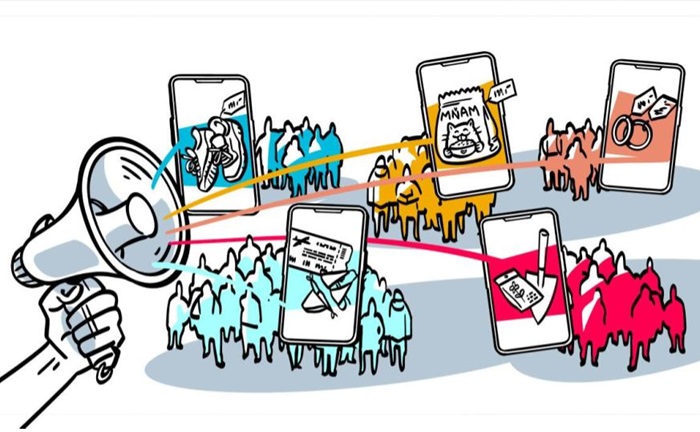
  • Messages: How and by whom do we choose messages for our mobile phones? What is the business model for selling our attention?
  • Data: What is our digital footprint and can it be avoided? Why can mobile be a spy in our pocket?
  • Algorithms: What and how can we predict what we will reliably click on? What do likes and emoticons reveal?
  • Advertising: Why do users sell more to advertisers than ad space? What is tailored advertising?
  • Information: what content is a reliable magnet for our attention? Why can’t we click on something?
  • Disinformation: what’s new about lies on the internet? Why does misinformation thrive on the internet? Who pays for it and why?
  • Information warfare: What is the nature of information warfare? What weapons does it use? What is its insidiousness?
  • Duopoly: Who owns the atomic briefcases of the world’s media? What options does it hold? Who can stand up to the giants?
  • The adversaries: what is the inequality of competition among the Internet players? And what is their dispute about? What should the media do?
  • Moods: How does information affect our moods? Why do social media bubbles radicalize society?
  • Addictions: what helps create our addiction to mobile? What is the treachery of likes? What makes TikTok dangerous?
  • Politics: How has the internet influenced politics? What are influence operations? What biases are created when we search for news?
  • Cyber issues: can technology be regulated? Is it freedom of speech or freedom of algorithms?
  • The future: what should we expect? What development milestones have we passed? What are the dangers and paths ahead?

The guide of the videos is actress and presenter Tereza Kostkova. The individual chapters are supported by a strong visual component. The illustrations, graphic background and theme song were created by the DRAWect illustration studio. The main artists are Markéta Troy Ryplová, Karel Cettl and Daniel Korta.

“As a whole, Cyber Taboo is intended for a wide target group, regardless of age or education, so that everyone can find their own personality in the project and the information will help them in their everyday life, serving them to orient themselves whenever they pick up a mobile phone,” says Libuše Šmuclerová, the author of the theme.

Individual videos can be found on the nova.cz website from today. In addition to the videos, a printed version of nearly 200 pages has been created under the auspices of the Czech News Center. It will be available at the end of April. All episodes of the Cyber Taboo project were produced under the direction of Tomáš Medek by TV Nova in cooperation with 38Film and with significant support from the PPF Foundation.

“The virtual world is governed by different laws than the real one. It creates new rules that are constantly changing and often go beyond our previous experience. The entire online sphere and its principles must be perceived and understood comprehensively if we want to understand their impact on real life. At PPF Foundation, we see digital well-being and online safety as one of the most important topics of our time and we believe that Cyber Taboo outlines the pitfalls of the online world in a comprehensible way and will thus be a valuable contribution to the societal debate,” adds Jana Tomas Sedláčková from PPF Foundation.

Source: mediaguru.cz

CZECH TELEVISION MOST WACTHED TV GROUP IN MARCH, NOVA LEADS IN PRIME TIME

Czech Television was narrowly the most watched domestic TV group in March. In prime time, the Nova group has the highest share. The Prima group improved year-on-year among the top three.

Czech Television stations remained the strongest TV group in all-day viewership in the over-15 category in March. Their share was 28.91%, down 1.3 percentage points year-on-year. The second group, Prima, came close, with its share in that audience group increasing by 0.5 percentage points year-on-year to 28.24%, according to official ATO-Nielsen data.

The Nova group was once again the strongest in prime time in March across all critical target groups. It also achieved the highest shares in all-day viewership in the 15-54 and 18-69 audience groups.

Of the top three, Prima was the only group to improve year-on-year in all prime-time audience categories and in all-day viewing in the universal 15+ group.

Atmedia’s representation also continues to grow, approaching the 7% mark (6.8%) in the 18-69 audience group. And Television Seznam continues to increase its share year-on-year, almost reaching a 2% share in 15+ and 2.18% in 18-69, where it sells advertising.

Deatiled data and the most favourite TV shows of the month available here.

Source: mediaguru.cz

TWO THEMATIC CHANNELS OF THE PRIMA GROUP CELEBRATED THEIR BIRTHDAY THIS APRIL

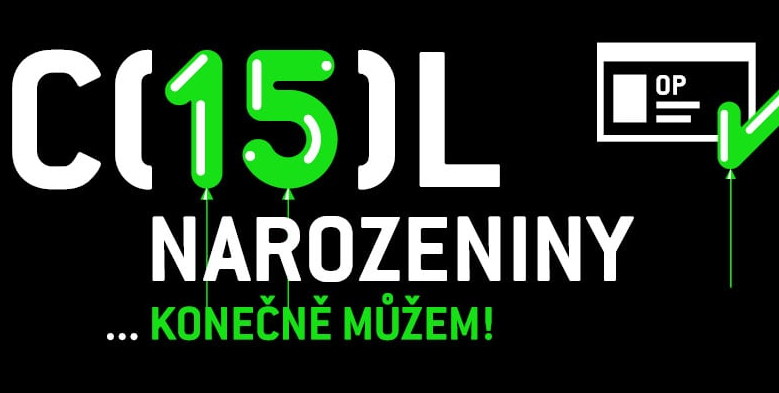
This April, two thematic channels of the Prima Group celebrated their birthdays. With the claim “15… Finally we can”, Prima Cool reached its 15th birthday, while Prima Krimi completed 6 years since its launch on Easter Monday. This spring, both channels have prepared a number of new programmes and premiere films for viewers.

Prima Cool will be dominated by Mikýř’s hysterics of Czech history, the channel will also offer the premiere of the Oscar-winning film Everything, Everywhere, All at Once or the series of action comedies Kingsman with the premiere of the last episode. Prima Krimi will bring the premiere series of the popular Purple River series and new episodes of Shadows of Death, while the return of investigator Vera Stanhope and her Crimes of the Moors is also announced.

“This year marks a beautiful birthday for two of our hugely popular themed channels. Prima Cool started on our screens on April 1, 2009, Prima Krimi started broadcasting on Easter Monday 2018 and we’ve been keeping its birthday moving ever since on that festive Monday, which this year also falls on the first day of April,”

says Alex Ruzek, Prima Group’s programme director, adding: “Since its launch, Prima Cool has primarily targeted young men, with CS M15-39 achieving a 6.53 per cent share across the day last year. Films were among the most watched programmes, but viewers were also entertained by our docuseries Porno!, Partička XXL and channel stalwart The Simpsons. Prima Krimi also did well, with a record-breaking last twelve months – its share among adult viewers in CS 15+ climbed to 4.11 per cent in the whole day. Viewers have been most drawn to its screens by the series Crimes of the Moors, so they will be delighted that we will be offering them premiere episodes this spring.”

PRIMA COOL

The celebrations began on Prima Cool the weekend before the birthday itself, 30 March, with the premiere of Kursk, based on the true story of the sinking of the nuclear submarine of the same name. Two weeks later, on 13 April, the film Everything, Everywhere, All at Once, which won seven Oscars last year, will hit the screens. Then, from April 14, a series of three Kingsmen films will be on screens every Sunday night fighting for justice, the latest instalment of which, subtitled First Mission, will premiere. Exciting acquisition titles then await audiences throughout this year.

During the spring, a new programme called Mikýř’s Hysteory of Czech History will offer an unconventional look into Czech history. One of the most renowned influencers of our time, Martin Mikyska, aka Mikýř, will guide the viewer through sites that are exceptional for Czech history and will put history school knowledge into remarkable contexts.

The marketing campaign “15… Finally We Can”, celebrating the channel’s birthday, creatively plays with the theme of things being legal from the 15th birthday this year. This will include print advertising, outdoor advertising across the country, TV spots and social media communications, such as a small motorbike that can be used to get a driving licence from that age, or, in the spirit of the young target group, a Coolu condom.

On the day of its birthday, Prima Cool launched one more novelty – it now offers audio description of the plot for visually impaired and blind viewers for selected programmes, also created with the help of artificial intelligence.

PRIMA KRIMI

Prima Krimi also marked its birthday on Saturday 30 March with its first gift for viewers. In the four premiere episodes of the popular series Purple River, every Saturday night brings new stories of investigators Pierre Niémans and Camille Delaunay. They will investigate bizarre art murders at a conservatory and a monstrous killer who is a cross between a man and a hyena, a deadly game of perverted voyeurs and mysteriously disappearing prisoners. Just before the end of the month, on April 28, Captain Sharon Raydor returns to the screen with her best practices and results in Closer: New Cases. Then, before the end of spring, the hugely successful Shadows of Death will return to screens, plus new episodes, and the popular Crimes of the Moors, starring the excellent Brenda Blethyn as Inspector Vera Stanhope, will make its premiere before the summer.

Source: mam.cz

TV NOVA WILL OFFER ADVERTISING SPACE IN INTERNATIONALLY CERTIFIED PROGRAMMES

Starting this May, TV Nova will start offering an advertising space in shows that have received international BAFTA albert certification. This is awarded by a UK platform focusing on sustainability in film and television and symbolises a commitment to environmental sustainability.

The move is part of a drive to promote sustainable production practices in the television industry and reduce the carbon footprint.

“We have long seen interest from clients in media brands that focus on reducing their environmental impact. I am pleased that we are the first television medium on the Czech market to offer promotion in these certified programmes. I believe this will not only promote sustainability in the TV industry, but also allow our partners to connect their brands and marketing activities with a credible initiative,”

summarises Honza Ulrych, Commercial Director of TV Nova.

For TV Nova’s business partners, this means the opportunity to promote their products or services in TV programmes that have been produced with a view to reducing negative environmental impacts. These include the crime series Specialists, which is watched by more than a million viewers every Monday, the evening show Ulice or the knowledge competition Na honu, hosted by Ondrej Sokol. Similarly, greenfilming is also used in the filming of the series Jedna rodina, which entertains fans every Tuesday and Thursday, and many others.

The British BAFTA albert platform is dedicated to the principles of sustainability in the film and television industry, helping to set the path to the smallest possible carbon footprint not only for large companies and corporations, but also for smaller production companies. By obtaining this certification, they also gain the right to use the albert logo in their communications, underscoring their sustainability efforts. The Nova Group has been a member of this initiative since 2021.

Source: mam.cz

Privacy Overview

This website uses cookies so that we can provide you with the best user experience possible. Cookie information is stored in your browser and performs functions such as recognising you when you return to our website and helping our team to understand which sections of the website you find most interesting and useful.