As a part of its membership in the professional organization egta, the Association of Television and Radio Companies from Europe and beyond, the Association of Commercial Television was granted the opportunity to host egta’s 2019 professional CEO & Top Exec’s Summit – the annual, 2-day egta-member meeting, where media companies share their experience, inspiration and contacts. This year’s meeting took place on June 6-7 and included more than 220 participants from 33 countries.
Amongst the 35 speakers, who were representatives of egta members but also advertisers, media or research agencies, were Ivan Yamshchikov, AI Evangelist from the Max Planc Institute, Stéphane Berubé – L´Oréal’s CMO for Western Europe, and Kim Younes – from the French media group M6 Publicité and Chris Goldson – from the British commercial leader ITV. The Czech media houses were represented by Jan Vlček from TV Nova/CME, Martina Říhová from Active Group and the client’s point of view was brought by Petr Janeba from Škoda Auto ČR.
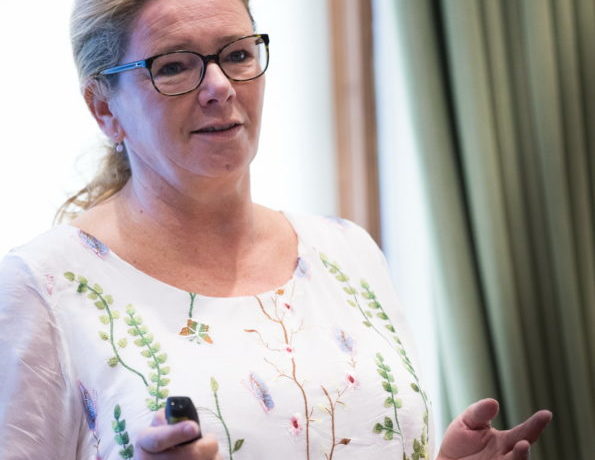
“The subheading of this year’s summit was “Building Bridges,” which is a big and up-to-date topic and not only for our television industry. This era has been changing rapidly; technologies are developing very fast and have crucial impact on consumer behavior. We, the media, thus have to adjust not only to the changing viewer habits but also to the demand and expectations from advertisers. Events like egta CEO Summit give us a valuable perspective on what and how our foreign colleagues deal with and, at the same time, inspire us as to what could work for us,”
says Marek Singer, AKTV’ s president
“The CEO and Top Exec’s Summit was the ideal opportunity to remind our delegates that both TV and radio are thriving now that they have digitally transformed and are available across a multitude of screens, devices and audio platforms. The exchange of insights, benchmarks and best practices in our constantly evolving industry illustrate that – whereas we can compete on the content that we propose to viewers – there are plenty of reasons for broadcasters to collaborate in the face of increasingly international competition. Our sincere thanks goes out to AKTV for graciously hosting the Summit in the beautiful city of Prague and providing the ideal conditions for these insightful two days,”
The Association of Commercial Television Broadcasters has now completed its second year of operation, during which it continued to develop its strategic activities in the fields of marketing and legislation. The most notable event of the past year was a marketing conference for TV advertising clients and advertising agencies, at which the marketing superstar, Australian professor Mark Ritson, gave a presentation. In the field of European legislation, the AKTV played an active role in the drafting of the Copyright Directive; at the Czech level, it has been involved from the very outset in the preparation of the transposition of the Audiovisual Media Services Directive (AVMSD). Following a two-year term of office, there has also been a change in the position of AKTV president, with Marek Singer of Prima taking over from Jan Vlček of Nova.
Prague, 29 March 2019– As part of its activities, the Association of Commercial Television Stations systematically focuses on dispelling prejudices against television, which are often held by advertisers. With the aim of bringing exceptional and respected international speakers and research studies to the Czech Republic, the AKTV organised a conference in autumn 2018 entitled‘Boost Your Media Performance’, whose headline speaker was one of today’s most prominent marketing figures, the Australian university professor and marketing expert Mark Ritson. In addition to him, speakers at the conference included Nicole Greenfield-Smith,Head of Research at the British marketing association Thinkbox, and Jakob Stigler, co-founder of the Mano agency, which creatively connects clients, agencies and the media.
As well as marketing awareness, AKTV also focused on legislative processes at both national and European levels. Among the most significant are the Copyright Directive, the Audiovisual and Media Services Directive, the ePrivacy Directive and many others.
AKTV’s marketing and legislative activities are also combined in its work within the Chamber of Commerce, where it is one of the founding members of the Creative and Cultural Industries section.
Is it legal to download games, movies and music from the internet? Although the internet may seem like a place of freedom and anonymity, sometimes the opposite is true. In particular, beware of intellectual property infringement.
Most of us know about netiquette and our digital identity but our digital footprint has other connotations. In the wild 1990s, and for many years after the turn of the millennium, there was no great problem getting anything on the global network, ranging from truly illegal stuff to matters that fall into the grey area.
Today, however, downloading illegal content is dangerous due to changes in legislation around the world and the fact that we have become “accustomed” to the internet, which is no longer a bizarre novelty but a ubiquitous thing.
There are precedents. The harshest punishments are given to those who run illegal servers for downloading programmes and other things, and large fines or jail terms have also been handed out to hackers who steal user data. However, those who redistribute illegal content and either make it available to others through uploading or direct mailing or sell it directly will not escape the hands of justice.
For personal use, the situation is more complicated and further escalated by the absolutely unclear Copyright Act. However, it will soon be amended in our country as a result of the approval of a new EU directive, which contains, among other things, controversial Articles 11 and 13.
Downloading films, music and video games
Let us focus directly on the three most popular media formats: films and TV series, music and video games.
The clearest situation is for video games: any downloading from an illegal source – anything not sold directly by the developer, distributor or a verified third party such as a digital platform – is illegal and potentially subject to punishment.
In practice, however, downloading a video game, even a brand new one, is not usually punished. Firstly, it would be very difficult to deal with systemically, and secondly, anti-piracy unions and publishers are fighting the cause, not the effect; they are trying to prevent distribution.
For example, beware of downloading from torrents (if you are not careful you also upload the downloaded data back, i.e. you are distributing illegal content) or any other distribution of downloaded content. This can be punished and legal precedents exist, regardless of the ethical side of the matter. And mind you, it does not matter whether you give the downloaded stuff away or sell it, any distribution is illegal.
For films and music that are not classified as computer programmes, the situation is different, albeit in detail. Due to outdated laws, it is generally legal – or at least in a grey legislative zone – to download films and music for personal use. It is not that simple but the Copyright Act more or less implies it; let us stress, however, that the Act dates from 2000 and has undergone only partial changes since then. Soon it will be subject to a more significant amendment.
Illegal downloading of programmes is an essential seedbed for viruses and malware.
What is important is that downloading music or movies is virtually worthless on today’s internet. With services like Spotify or Deezer for recorded music, and Netflix or HBO GO for films and TV series for a few hundred crowns a month, it is completely pointless to bother with potentially dangerous and illegal downloads of poor-quality music and films.
GDPR
Another EU directive has provided users with more power and ability to decide how companies handle their data – and not just European companies, the global ones as well. On virtually all services collecting user data (programmes, websites, mobile and PC apps, etc.), it is possible to tick or review how the service handles users’ information.
The General Data Protection Regulation (GDPR) has helped transform the world of information and is currently inspiring similar rules in other countries around the globe, including the United States.
But one thing is important for European users: GDPR makes it much harder for companies to sell user data to third parties. It is also the reason why on most websites a notice pops up about how they collect our information, or a little bar appears, telling us how they use that data in compliance with GDPR and contractual terms.
TV professionals around the world are celebrating World Television Day on 21 November to remind us that TV – as in Total Video – is so much more than linear viewing. As part of the annual United Nations initiative, a 30 second-spot will be shown by broadcasters on air and online across the globe.
TV content that entertains, informs and inspires.
The topic of the 22nd edition of this global celebration is quality content. The outstanding quality of TV programmes is reflected in how this proven medium has the unmatched capacity to entertain, inspire and inform viewers, across all platforms.
Last year alone the production of TV fiction in the European Union amounted to about 920 different titles, representing over 16 400 episodes and more than 11 000 hours, according to the European Audiovisual Observatory’s latest report.
Quality content can incite viewers to broaden their mind and look beyond the everyday life through inspirational shows. It also has the power to entertain and unite scores of people around live programming,
such as the recent World Cup (3.4 billion people watched some of the World Cup this year, according to GlobalWebIndex). Finally, TV informs viewers through in-depth news broadcasts, makes them aware of current societal issues and provides learning through quality children’s programming or insightful documentaries.
“Television must continue to play its role as to educate and engage viewers, especially young audiences. This includes sharing success stories about individuals or organizations that are part of making our society better and more sustainable. This is amplified by the theme ‘premium content-content that unites, inspires and informs’ of this year’s World Television day, November 21st.“ asserts Caroline Petit, Deputy Director United Nations Regional Information Centre for Europe (UNRIC).
Nothing beats the unique combination of sight, sound and (e)motion.
A clear indicator of the good health of television is the vast amount of money being invested in programmes by broadcasters around the world, both in original content as in the acquisition of shows. Figures1 gathered from IHS Markit for a total of 27 countries and a survey among egta members in 21 countries show that last year, close to 140 billion dollars was invested in programmes – with North America accounting for $ 61 bn – surpassing any investments made by OTT platforms around the world. The most notable investments² in television programmes in Europe were made by the UK (€ 8,6 bn), Germany (€ 8bn), France (€ 5,5 bn) and Italy (€ 4,4 bn).
In addition to this, figures gathered from over 24 countries by The Global TV Group in the second edition of its Global TV Deck highlight TV’s resilience and effectiveness as an advertising medium.
For more information, please visit http://www.worldtelevisionday.tv
World TV Day – spot TV Nova
World TV Day – spot TV Prima
World TV Day – spot Óčko
Press contacts:
Alain Beerens
Marcom Manager, egta
Association of television and radio sales houses
T : +32 2 290 31 38
alain.beerens@egta.com
Anne Brochot
Senior Project Manager,
Eurovision TV, EBU
European Broadcasting Union
T +41(0) 22 717 28 88
brochot@ebu.ch
Grégoire Polad
Director General, ACTAssociation of Commercial Television in EuropeT +32 2 738 76 12gp@acte.be
Sources:
IHS Markit Channels & Programming Intelligence – TV programming expenditure 2017 by region ($ billion) – data from 27 countries
egta member survey in 21 countries
ABOUT THE GLOBAL TV GROUP
The Global TV Group is an informal grouping of broadcasters’ and sales houses’ trade bodies in Europe, the USA, Canada, Australia and Latin America, whose joint objective is to promote television and remind advertisers, journalists, tech gurus, agencies and industry peers about the effectiveness and popularity of TV.
The Association of Commercial Television in Europe (ACT) represents the interests of leading commercial broadcasters in 37 European countries. The ACT member companies finance, produce, promote and distribute content and services benefiting millions of Europeans across all platforms. ACT engages with the EU institutions to achieve a balanced and appropriate regulatory framework which will encourage further investment and growth in our sector.
The European Broadcasting Union (EBU) is the world’s leading alliance of public service media, with 73 members in 56 countries from Europe and beyond. The EBU operates Eurovision and Euroradio and is devoted to making public service media indispensable. The EBU supports and strengthens public service media, provides first-class media services and offers members agile platforms for learning and sharing.
egta is the association representing television and radio sales houses, either independent from the channel or in-house, that markets the advertising space of both private and public television and radio stations throughout Europe and beyond. egta fulfils different functions for its members in fields of activities as diversified as regulatory issues, audience measurement, sales methods, interactivity, cross-media, technical standards, new media, etc. During its more than 40 years’ existence, egta has become the reference centre for television and radio advertising in Europe. egta counts more than 140 members operating across 40 countries.
The Brussels-based United Nations Regional Information Centre for Europe – UNRIC – provides information on UN activities to 22 countries and is active on social media and websites in 13 languages. It acts as the European communication office of the United Nations and its aim is to engage and inform European citizens about global issues. It also liaises with institutions of the European Union in the field of information. Its outreach activities, joint public information campaigns and events are organized with partners including the EU, governments, the media, NGOs, the creative community, and local authorities.
Egta – the association of television and radio sales houses – commends EU policymakers for reaching an agreement on a new Audiovisual Media Services Directive. Two years of challenging negotiations have delivered some welcome flexibility in commercial communications which should contribute to a more competitive environment for European broadcasters.
We are encouraged by the liberalisation of the rules on advertising minutes and the much-needed protection of media service providers’ signal integrity. In tandem with the new responsibilities that video sharing platforms will have to abide by, sales houses see this as a first step towards a level playing field for European content producers.
egta and its member sales houses saw the revision as an opportunity to modernise the European audiovisual regulatory framework. Despite a constructive dialogue with the European institutions, it should be acknowledged though that the net result is one of modest progress rather than a future-proof legislation that reflects market realities.
Malin Häger, egta President, comments: “We sincerely welcome the positive progress made on the rules that govern audiovisual commercial communications, particularly with regards to advertising time limitations. However, we must also recognise that on some aspects, the text is less ambitious than we hoped for at the beginning of this process. Broadcasters remain far more heavily regulated than online actors who are competing for the same advertising revenue. In order to provide long-term value, it is therefore crucial that the measures foreseen in the reform are applied and enforced consistently”.
The audiovisual advertising sector contributes positively to the European Digital Single Market, and egta is confident that we can work together with regulators to ensure that this revision delivers tangible benefits to the industry. About egta:
egta is the association representing television and radio sales houses, either independent from the channel or in-house, that market the advertising space of both private and public television and radio stations throughout Europe and beyond. egta counts more than 140 members across 40 countries.
In its first year of existence, the Association of Commercial Television Stations set itself two main objectives. Through marketing activities, to raise awareness amongst advertisers of television as a key advertising medium and to engage in the process of drafting legislation with a direct impact on the commercial television industry. During its first year, AKTV also joined the Chamber of Commerce, where it is an active member of the Creative Industries Section, and has also become an associate member of the international trade association EGTA, which brings together television and radio media agencies.
The Association of Commercial Television Stations was established in the spring of 2017 in response to the growing need for commercial television stations to defend and promote their interests. The founding members were the Nova, Prima and Óčko television groups, with Jan Vlček from Nova taking up the first presidential term.
As part of its marketing activities, and in response to frequent unsubstantiated claims by global players in the online advertising sector, AKTV focused on direct communication with the most significant advertisers in the Czech Republic. During its first year, it organised two educational seminars aimed at the senior management of the largest advertisers, specifically managing directors and marketing directors. The common thread running through both conferences was the presence of exceptional international speakers and premium, highly topical content.
At the first event, Les Binet, a renowned expert and author of specialist books on marketing from the London-based agency adam & eve DDB, spoke on the effectiveness of advertising; whilst the keynote speaker at the second event was Australian university professor and researcher Karen Nelson-Field, who presented the findings of her latest research comparing the effectiveness of television and online advertising. This year, AKTV will continue these activities with the aim of responding to advertisers’ demand for relevant and unbiased information on the current status of individual media types and trends in their use.
“We have been hearing more and more often that television is dead and that online is the only future for advertising. However, as the data shows that time spent watching television is not only not decreasing but is actually increasing, we felt the need to highlight these facts to advertisers as well. For example, last year viewers aged 15 and over watched television for 3 hours and 45 minutes a day, which is almost a quarter of an hour more than five years ago and even half an hour more than ten years ago. Furthermore, television remains the most popular medium among viewers across all age groups,
says Jan Vlček, president of AKTV.
Part of AKTV’s marketing activities also involves active participation in the global initiative ‘The Global TV Group’, an unofficial grouping of associations of television companies and media agencies in Europe, the USA, Canada, Australia and Central America, which aims to promote television broadcasting.
In addition to marketing awareness-raising, AKTV has also focused on legislative processes at both national and European levels. One such activity, for example, was a seminar on European audiovisual legislation, which AKTV organised in Brussels in collaboration with its partner association, ACT, for Czech and Slovak MEPs.
Media operators and advertising agencies associated in professional associations jointly support the amendment to the Medicines Act, which will be voted on Friday in the plenary session of the Chamber of Deputies and which proposes to repeal the latest amendment to the law on advertising regulation. In fact, last year, an amendment to the Medicines Act amended the Advertising Regulation Act by extending responsibility for the compliance of the content of advertising for selected types of products – human medicines, food supplements and food for special and infant nutrition – with the law to its mere disseminators. Until then, only those actually involved in the advertising of such products were responsible for the compliance with the law, as is the case for other types of products. The amendment seeks to return to the original form of the law on advertising regulation.
The problematic amendment, which introduced the joint and several liability of the advertiser for the compliance of the content of advertising for medicinal products for human use, food supplements, food for special nutritional uses and infant formulae with the law, has been in force since April 2017. It has not led to any increase in the level of consumer protection, it has just proved to be easily exploitable for the competition of the producers of the products concerned. Already last spring, the entire media sector warned that extending liability to the disseminators of advertising cannot lead to greater consumer protection. Advertisers do not have the professional qualifications or the legal tools to be able to gather the necessary evidence and make an informed assessment of whether or not the advertised product, for example, actually boosts immunity.
“Media operators understand that the aim of the amendment was to provide greater consumer protection, but shifting responsibility to the advertiser is not the right way to go. Consumer protection can only be increased by effective enforcement of legal obligations on advertisers. We hope that the legislators will understand this fact and support the amendment that returns the wording of the Advertising Regulation Act to its original form and reject the current amendment as unconceptual and unsystematic,”
comments Ján Simkanič, Chairman of the Association for Internet Development (SPIR).
The Association of Commercial Television Broadcasters (AKTV), which brings together the leading commercial television broadcasters in the Czech Republic, has become a new associate memberof egta, a professional association bringing together television and radio media agencies not only from Europe but also from other countries around the world. AKTV will represent the Czech Republic alongsideegta’sexisting members – the Nova and Prima television groups, as well as AtMedia Group.
In addition, AKTV has also joinedThe Global TV Group, an unofficial grouping of associations of television companies and media agencies in Europe, the USA, Canada, Australia and Central America, which aims to promote television broadcasting.
Over the course of its 43 years of operation, egta has significantly expanded its scope of activity and its membership base, which currently numbers 139 members in more than 40 countries worldwide. egta offers its members support in the areas of research, marketing and networking, as well as assistance with advocacy and during the drafting of regulatory legislation. The association organises a wide range of international specialist conferences and seminars. Thanks to its extensive network, the association has contributed to the creation of the global initiativeThe Global TV Group, which brings together associations of television broadcasters and television advertising sellers from around the world.
“We greatly appreciate the support and trust we receive from egta in the day-to-day running of our organisation. AKTV’s agenda is wide-ranging, from marketing activities to public affairs, which is why we value our close cooperation and are happy to draw on the expertise of egta’s specialists,”saysJan Vlček, President of the Association of Commercial Television Stations.
“We are very proud to welcome AKTV as an associate member of the egta association and look forward to working closely together on our shared interest: the promotion of television broadcasting,”addsKatty Roberfroid, Chief Executive of egta.
The Association of Commercial Television (AKTV) is an association of terrestrial television broadcasters whose aim is to defend, support and promote the common interests of commercial broadcasters in the Czech Republic. AKTV was established in 2017 in response to the growing need for commercial television stations to defend and promote their interests. AKTV represents these interests in dealings with the government and acts as a partner in the dialogue on the drafting of national and European legislation. It also focuses on copyright protection and marketing and educational activities in the field of television broadcasting.
egta is a European trade association of marketers specialising in advertising solutions across (various) screens and/or audio platforms, with the aim of helping its members to protect, improve and expand their offering of content produced and broadcast linearly on television channels and radio stations.
egta’s members are media agencies that commercially exploit advertising space on both commercial and public service television and radio stations in Europe and other countries. The significance of the egta lies in the diversity of its members: these include independent media agencies and commercial departments within television or radio companies. They range from large corporations to medium-sized firms in smaller markets.